
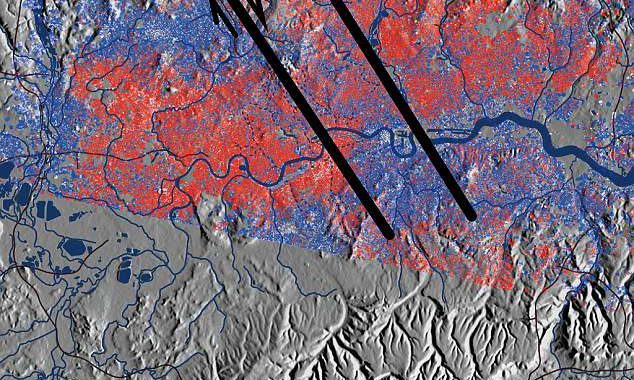
Scientists discovered two fault lines under London that could trigger an earthquake
Updated April 2026, with FAQ, references, and earthquake safety guidance.
Two major fault lines in London
The feng shui of London is very good. However, in 2018, researchers at Imperial College London found two fault lines running under London that could potentially cause a magnitude 5 earthquake. These fault lines move between 1mm and 2mm every year. The faults run directly under central London and under Canary Wharf. The researchers were using Persistent Scatterer Interferometric Synthetic Aperture Radar (PSInSAR) and believe that London is overdue for a quake but suggest that there is a one-in-a-thousand-year chance of a tremor. “The faults were initially inferred from geomorphology – drainage patterns, etc. – [along with] borehole records, and site visits,” Ghail told IFLScience. He noted, though, that they “detected their motion using satellite Persistent Scatterer Interferometry (PSI) radar data,” a technique that tracks even small changes in displacement over time.
An earthquake has not struck London since the 1700s
The last large earthquake in London happened on the 6th of April 1580, and it had a comparably large magnitude 5.5. A magnitude 5 earthquake is comparable to shaking, similar to standing on a platform between two passing trains. However, a magnitude 6 earthquake could cause damage to buildings. New buildings in London will be made so they can withstand a quake registering 6.5 on the Richter Scale. Dr Ghail, a researcher at Imperial College London, said the greatest risk to Londoners is not the earthquake itself but the knock-on effects (disruption to infrastructure, economic impact, secondary hazards, building damage, long-term recovery challenges, etc).
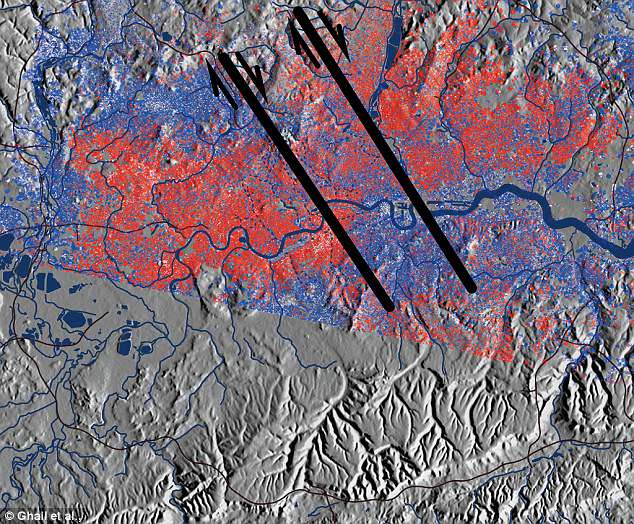
This West-East distribution shows the movement over an eight-year period from 1992 – 2000. Red implies the land moved westwards, whilst blue shows an eastward shift. If a magnitude 5 earthquake hit, the shaking would be similar to standing on a platform between two passing trains.
Geopathic stress and fault lines
Research in geopathics and geobiology suggests that geopathic stress can be caused by fault lines. Traditionally, in many cultures, people tried to avoid building or living over fault lines for obvious reasons. Having said that, some of the most famous sacred places and temples are built over fault lines because people believe that the energy released through fault lines and quakes could be beneficial but in small doses, according to the hormesis theory. Igor V Florinsky (2010) looked at 104 monasteries and almost all of them were located along fault lines and intersections of them. Another researcher Farmaki (2013), identified that the majority of the temples in Greece were on fault lines or near one. Lydia Giannoulopoulou, who did her PhD on this subject, suggests that “most basic characteristic of ancient monuments and temples is the concentration of natural geomagnetic and electric fluctuations.” The theory of hormesis states that the same external agent can cause low-dose stimulation and high-dose suppression on living organisms; hence a bit of geopathic stress can be beneficial, but too much over a long time can be harmful. Learn more about geopathic stress
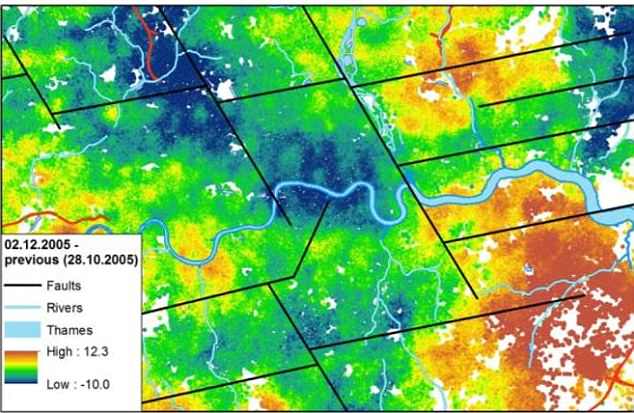
This image shows ground movement in London between October and December 2005, with known faults shown by the black lines.
London earthquake risk. Where are the fault lines in London?
In geology, a fault line is a crack or discontinuity in the Earth’s surface, along which movement and displacement that take place there. The energy released by the movement on the active fault lines is what causes most earthquakes. Faults don’t usually consist of a single fracture, so the term ‘fault zone’ refers to the area where deformation is correlated with the fault plane. In many parts of the world, it is prohibited to build near faults (California, Japan), where earthquakes are a regular hazard and can damage the infrastructure and lead to injuries and death. The researchers at Imperial College London revealed that the subterranean fault lines shift between 1 and 2 mm every year. Dr Ghail, a civil engineering specialist at Imperial College, talking about the chances of a magnitude five earthquake, said it’s ““enough to be scary but not fundamentally a problem”.
London’s two major fault lines go through central London and under Canary Wharf.
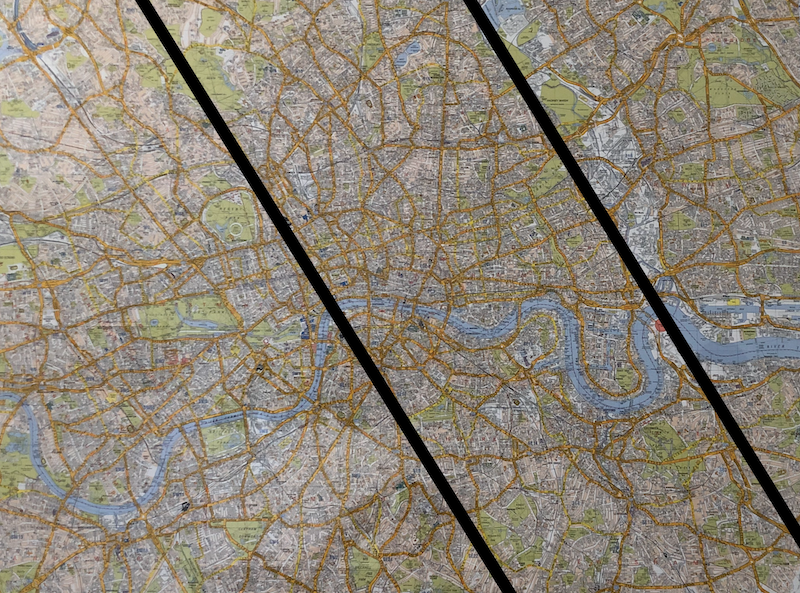
London fault lines and possible earthquake areas: central London and under Canary Wharf
Earthquakes in the UK
The UK is not known for earthquakes, but the British Geological Survey (BGS) reminds us that they do occur – hundreds of small ones take place each year, but mainly on the western side of the British mainland. The largest occurred in 1931, some distance offshore, registering as a 6.1M tremor.
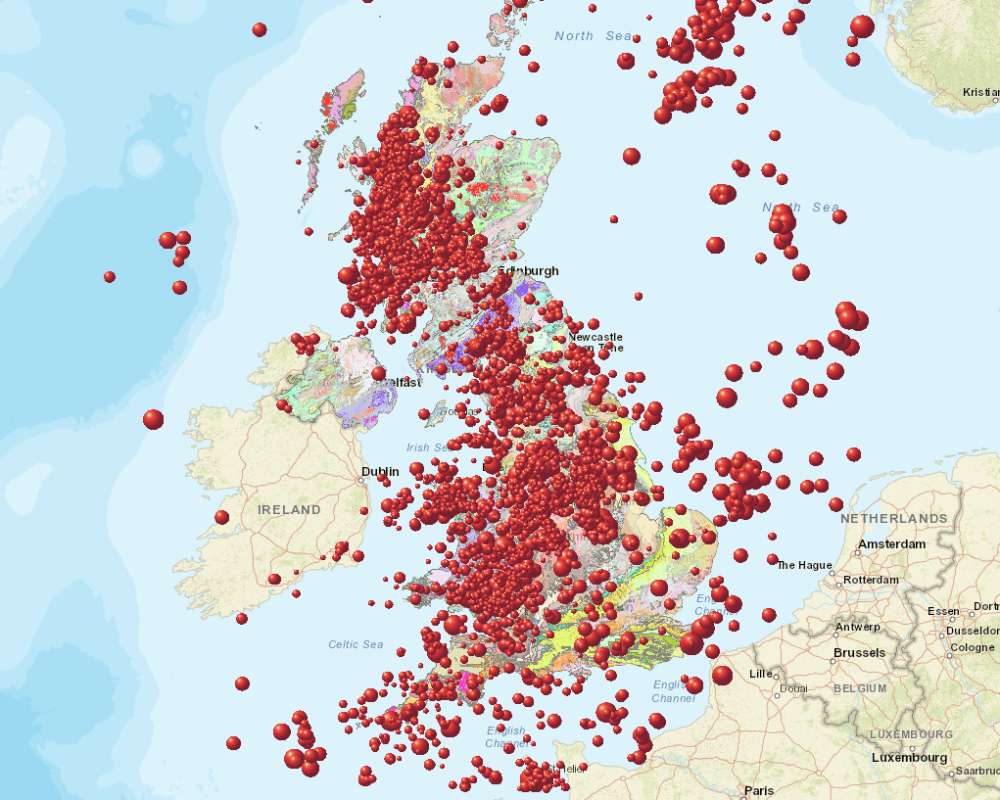
Earthquakes in the UK, from 1956 to now, at varying magnitudes. BGS
In the week of 27-30 June 2018, there were two earthquakes of a magnitude of 2.4 and 2.6 in Surrey for the first time in 40 years. There is a “constant stream” of small earthquakes all over the UK on regular bases, says Richard Luckett, a BGS seismologist. There are concerns that fracking can cause the quakes, and Mr Luckett said, “It is plausible, as fracking can cause earthquakes.”
What are the long-term consequences for property values in earthquake-prone areas
Lower Property Values
Properties in high-risk earthquake zones typically experience lower market values due to the potential for damage or destruction. This depreciation can be prolonged, especially in areas known for frequent seismic activity. Buyers are often wary of investing in regions where the risk of significant damage is high, leading to a sustained decrease in property values.
Higher Insurance Costs
Insurance premiums in earthquake-prone regions are generally higher, adding to the overall cost of property ownership and potentially deterring buyers. In some instances, earthquake insurance may be unavailable or prohibitively expensive, further depressing property values. The added financial burden of high insurance premiums can make properties less attractive to prospective buyers.
Increased Maintenance and Retrofitting Costs
Property owners in high-risk areas often need to invest in seismic retrofitting and ongoing maintenance to ensure their buildings can withstand earthquakes. These additional costs can significantly impact the overall value of the property, as buyers may factor in the expense of maintaining seismic resilience.
Fluctuating Demand
The perception of earthquake risk can lead to fluctuating demand for properties in affected areas. Decreased demand typically drives down prices, but this effect can vary over time depending on recent seismic activity and public awareness of the risks. For example, after a major earthquake, demand may temporarily plummet before gradually stabilising.
Long-Term Economic Impact
Earthquakes can cause economic downturns in affected areas, leading to prolonged depression in property values. Reduced employment opportunities and overall economic activity contribute to a less vibrant real estate market. The economic repercussions of a significant earthquake can resonate for years, further diminishing property values.
Changes in Risk Perception
Major earthquake events, even in other regions, can alter the perceived risk in earthquake-prone areas. For instance, the real estate market in Istanbul was affected by earthquakes in other parts of Turkey, leading to a shift in perception and subsequent impact on property values. This change in perception can have lasting effects, as potential buyers reassess the risks associated with purchasing property in such areas.
Spatial Variations in Impact
The effect of earthquake risk on property values is not uniform across an area. Certain locations within earthquake-prone regions may experience more significant price impacts than others, depending on factors such as soil conditions, proximity to fault lines, and local building standards. Areas with poor soil conditions or those closer to active fault lines may see more substantial declines in property values.
Objective vs. Perceived Risk
Research indicates that objective long-term earthquake probabilities have a statistically significant negative impact on property prices. However, the market’s reaction to short-term earthquake risks may differ. Both long-term probabilities and recent seismic events play a role in determining property values, with buyers considering both the statistical likelihood of an earthquake and the memory of recent events.
Conclusion
These long-term consequences underscore the complex relationship between earthquake risk and property values. The interplay of lower property values, higher insurance and maintenance costs, fluctuating demand, long-term economic impacts, changes in risk perception, spatial variations in impact, and the distinction between objective and perceived risk all contribute to this intricate dynamic. Understanding these factors emphasises the need for comprehensive risk assessment and mitigation strategies in earthquake-prone areas to better manage and mitigate the financial and societal impacts of seismic activity.
“Prevention is better than cure.”
Educate yourself if your home or workplace is on a fault line. The full list of geological faults in England. For people living outside the UK, check your local lists of fault lines.
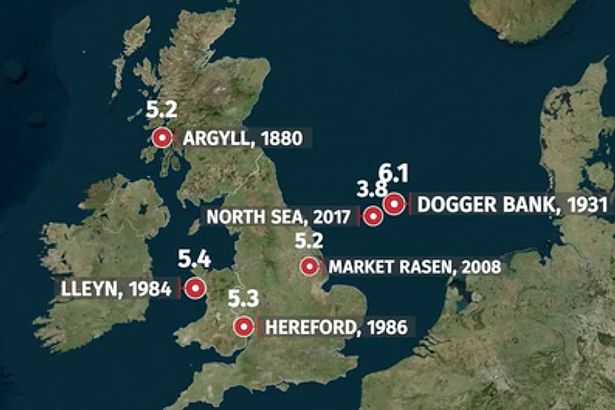
A map showing where earthquakes have occurred in the UK and the size of each one ( Image: Wales Online)
Earthquakes and volcanos in the world
Other countries have more seismic activity as well as volcanic activity. For example, Iceland is a very volcanic country, and earthquakes accompany volcanic eruptions. When I visited the country as a feng shui consultant and environmental psychologist to evaluate feng shui of Reykjavik and Iceland, researchers were very clear that there would be more volcanic activity there because the glaciers are melting, and this activates the volcanos.
FAQ: London earthquake, fault lines in London, and earthquake risk in London
Can London have an earthquake?
Yes, London can have an earthquake. Earthquakes in London are less common than in southern Europe or Japan, but they do occur in the UK. London has also been affected by historic seismic events, most notably the 1580 Dover Straits earthquake. For a wider perspective on the capital, see the feng shui of London.
Are there fault lines under London?
Research discussed on this page points to fault related zones beneath London, especially around central London and Canary Wharf. This does not mean a major London earthquake is about to happen, but it does mean London is not completely free of seismic risk.
Which parts of London are most often linked to fault lines?
The two places most often mentioned in relation to fault lines in London are central London and Canary Wharf. These areas have attracted attention because of measured ground movement and fault related discussion, although earthquake effects can vary across the wider city depending on geology and building conditions.
Is London at risk of an earthquake?
Yes, but London earthquake risk is low by European standards. Cities such as Naples, Athens, Bucharest and Lisbon are generally regarded as more earthquake prone than London. See also my pages on Naples, Athens, Bucharest, Lisbon and Paris.
Is London overdue for an earthquake?
That phrase appears often in headlines, but it should be used carefully. A more balanced summary is that earthquakes in London are possible, and fault activity has been discussed by researchers, but London remains a lower risk city than the main earthquake hotspots in Europe.
When was the last major earthquake that affected London?
The best known historic example is the 6 April 1580 Dover Straits earthquake, which was felt widely and caused damage in London. That event is still the clearest historic reminder that London is not an earthquake free city.
Which European cities are more earthquake prone than London?
Several European cities are more earthquake prone than London, especially Naples, Athens, Bucharest and Lisbon. Reykjavik also sits in a much more seismically active national setting than London. You can explore my related pages on Naples, Athens, Bucharest, Lisbon, Reykjavik, Rome, Zurich and Valletta.
Which cities outside Europe are much more earthquake prone than London?
Outside Europe, Tokyo is far more earthquake prone than London. Hong Kong has a much lower local earthquake risk than Tokyo, but tremors have been recorded there as well. Related pages include Tokyo and Hong Kong.
Should Londoners worry about earthquakes?
There is no reason for panic, but there is also no reason to assume the risk is zero. The evidence based position is that London has a real but comparatively low earthquake risk, especially when compared with cities in southern Europe and Japan.
What should you do during an earthquake in London?
If you feel earthquake shaking in London, the safest general advice is to Drop, Cover and Hold On. Drop to your hands and knees, cover your head and neck, shelter under a sturdy table or desk if one is close by, and hold on until the shaking stops. Stay away from windows and do not run outside during the shaking. After the tremor, check for injuries, leave the building only if the building is unsafe, and be prepared for possible aftershocks.
Ready.gov. (n.d.). Earthquakes. https://www.ready.gov/earthquakes
ShakeOut. (n.d.). Drop, Cover, and Hold On. https://www.shakeout.org/dropcoverholdon/
Which other city pages on this website are relevant to earthquake and fault line discussions?
You may also want to explore my city pages on Barcelona, Madrid, Lisbon, Porto, Naples, Rome, Bucharest, Reykjavik, Valletta, Hong Kong, Tokyo, and the wider feng shui consultant near me archive.
References
- British Geological Survey. Do earthquakes occur in the UK? https://www.earthquakes.bgs.ac.uk/education/faqs/faq6.html
- British Geological Survey. Significant earthquakes in and around the UK. https://www.earthquakes.bgs.ac.uk/earthquakes/UKsignificant/index.html
- British Geological Survey. Where do earthquakes occur? https://www.bgs.ac.uk/discovering-geology/earth-hazards/earthquakes/where-do-earthquakes-occur/
- ETH Zurich. New earthquake assessments strengthen preparedness in Europe. https://ethz.ch/en/news-and-events/eth-news/news/2022/04/new-earthquake-assessments-strengthen-preparedness-in-europe.html
- Japan Meteorological Agency. Monitoring of Earthquakes, Tsunamis and Volcanic Activity. https://www.jma.go.jp/jma/en/Activities/earthquake.html
- Hong Kong Observatory. Chance of a significant earthquake in Hong Kong. https://www.hko.gov.hk/en/gts/equake/sig_eq_chance.htm
- Hong Kong Observatory. Earthquake and Tsunami Knowledge Needs to Know. https://www.hko.gov.hk/en/gts/equake/earthquake_tsunami_knowledge_need_to_know.html
- Feng Shui London. Fault Lines Discovered in London. https://www.fengshuilondon.net/fault-lines-discovered-in-london/