A “missing Bagua area” is a feng shui interpretation of an irregular floor plan, not an objectively measurable defect in a house or a proven cause of difficulty in health, money, relationships, or career. The idea draws on older Chinese directional symbolism, but its best known modern form reflects a later popular reinterpretation, especially in Western feng shui.
The meaning of a “missing Bagua area”
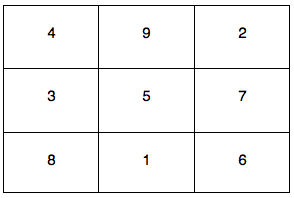
The Bagua, literally “eight trigrams,” is a symbolic system associated with the Yijing or I Ching (Book of Changes). The eight trigrams, Qian, Kun, Zhen, Xun, Kan, Li, Gen, and Dui, express relationships among yin and yang, natural processes, family roles, directions, and the Five Phases. In many feng shui systems, the trigrams are arranged around a centre to form a nine-part diagram, often called the luoshu or nine-palace grid (Smith, 2012).
In contemporary practice, the nine-part grid may be placed over a floor plan. If the building does not fill one of the grid’s outer sections, because the home is L-shaped, U-shaped, deeply recessed, narrow, or otherwise asymmetrical, the absent section can be described as a missing area, missing sector, or missing corner.
For example:
- In a compass-based interpretation, a missing southeast sector may be connected with Xun, the wood phase, the eldest daughter, and, in some systems, prosperity or resources.
- In the popular front-door-based Black Sect Tantric Buddhist (BTB) approach, the same physical recess may be called “wealth” because it falls in the rear-left third of the plan when viewed from the principal entrance.
- Other systems may label the same location as a missing family, relationship, knowledge, fame, career, or helpful-people area.
The fact that one physical feature can receive different meanings according to the method is important. The attributed consequence comes from the interpretive map, rather than from a property of the architecture that can be independently measured.
Continue reading →