
There are many books on electromagnetic pollution, EMFs (electromagnetic frequencies) and solutions to the problem of electrosmog. I suggest starting with these three books that cover most of the subject and offer simple solutions and preventive measures.
Overpowered: The Dangers of Electromagnetic Radiation (EMF) and What You Can Do about It by Martin Blank, PhD
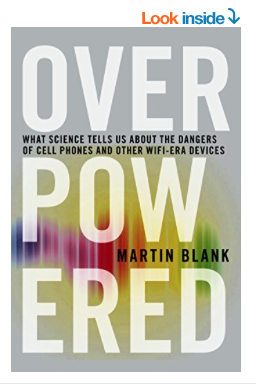
Overpowered The Dangers of Electromagnetic Radiation What You Can Do about It by Martin Blank
Keys, wallet, cell phone . . . ready to go! Cell phones have become ubiquitous fixtures of twenty-first-century life—suctioned to our ears and stuck in our pockets. Yet, we’ve all heard whispers that these essential little devices give you brain cancer. Many of us are left wondering, as Maureen Dowd recently asked in the New York Times, “Are cells the new cigarettes?”
Overpowered brings readers, in accessible and fascinating prose, through the science, indicating biological effects resulting from low, non-thermal levels of non-ionizing electromagnetic radiation (levels considered safe by regulatory agencies), coming not only from cell phones but many other devices we use in our homes and offices every day.
Dr. Blank arms us with the information we need to lobby the government and industry to keep ourselves and our families safe.
Order it on Amazon: Overpowered: The Dangers of Electromagnetic Radiation (EMF) and What You Can Do about It by Martin Blank, PhD
The Non-Tinfoil Guide to EMFs: How to Fix Our Stupid Use of Technology by
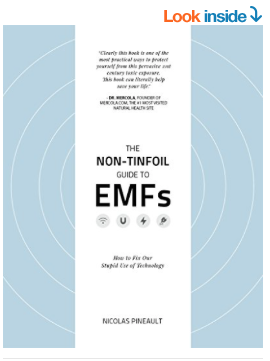
The Non-Tinfoil Guide to EMFs How to Fix Our Stupid Use of Technology by Nicolas Pineault
Can you really feel years younger & make unexplained symptoms vanish with the click of a button — the “Airplane Mode” on your cell phone? Investigative Health Journalist Nicolas Pineault used to think this all sounded like something only crazy people wearing tinfoil hats would say. But the overwhelming amount of independent scientific evidence linking electromagnetic fields (EMFs) from wireless technologies with increased risks of cancer, infertility, insomnia, and depression sure has the uncanny ability to change a man’s mind. The Non-Tinfoil Guide to EMFs is a simple and unconventional book that will teach you exactly how to reduce your exposure to this brand new 21st-century pollution without going back to the Stone Age.
You will learn:
What your smartphone, your wifi router and your microwave oven have in common (page 9)
Why policymakers and scientists all worldwide don’t agree about whether EMFs are dangerous or not (page 21)
Is Electro-Hypersensitivity as popularized in the TV show “Better Call Saul” real? Or is it all psychological? (page 62)
Why carrying a cell phone in your pocket can harm your fertility (201 studies prove it) (page 72)
The 1-click fix to reduce cellphone EMFs by 84% (page 142)
What is safer? Speakerphone, earbuds or a Bluetooth earpiece? (page 155)
The #1 worst source of EMF radiation at home (page 160)
Why baby monitors are worse than smartphones, and better alternatives (page 208)
It’s true. The jury is still out about whether cellphone radiation is the new smoking or just a temporary scare. But why take chances?
Order it on Amazon: The Non-Tinfoil Guide to EMFs: How to Fix Our Stupid Use of Technology by
The Invisible Rainbow by Arthur Firstenberg
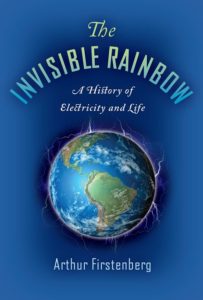 The story the invention and use of electricity has often been told before, but never from an environmental point of view. The assumption of safety and the conviction that electricity has nothing to do with life are by now so entrenched in the human psyche that new research, and testimony by those who are being injured, are not enough to change the course that society has set. Two increasingly isolated worlds—that inhabited by the majority, who embrace new electrical technology without question, and that inhabited by a growing minority, who are fighting for survival in an electrically polluted environment—no longer even speak the same language. In The Invisible Rainbow, Arthur Firstenberg bridges the two worlds. In a story that is rigorously scientific yet easy to read, he provides a surprising answer to the question, “How can electricity be suddenly harmful today when it was safe for centuries?”
Arthur Firstenberg is a scientist and journalist who is at the forefront of a global movement to tear down the taboo surrounding this subject. After graduating Phi Beta Kappa from Cornell University with a degree in mathematics, he attended the University of California, Irvine School of Medicine from 1978 to 1982. Injury by X-ray overdose cut short his medical career. For the past thirty-five years, he has been a researcher, consultant, and lecturer on the health and environmental effects of electromagnetic radiation, as well as a practitioner of several healing arts.
Order the book: this book is not available on Amazon at the moment but you can get it here – keep scrolling until you see it
If you want several copies – you can order them from Arthur Firstenberg’s website
Electromagnetic fields and health: concerns beyond tissue heating
Mobile phones, Wi-Fi routers, smart meters and other wireless technologies are everyday sources of electromagnetic fields (EMFs). Concerns have been raised about their possible nonthermal effects, meaning biological changes that occur without tissue heating, particularly effects on cellular signalling, oxidative stress and mitochondrial function.
One proposed mechanism involves voltage-gated calcium channels, which regulate calcium entry into cells. Pall (2018) argues that EMFs can activate these channels, potentially increasing intracellular calcium and triggering damaging biochemical processes. This proposed pathway could contribute to oxidative stress and impaired mitochondrial energy production. However, a proposed mechanism should not be presented as established evidence that ordinary household wireless exposure causes mitochondrial failure or chronic disease (Pall, 2018).
Cancer concerns also feature in the discussion. In 2011, the International Agency for Research on Cancer (IARC) classified radiofrequency electromagnetic fields as possibly carcinogenic to humans (Group 2B). Its assessment identified limited evidence concerning glioma and acoustic neuroma among wireless telephone users. Importantly, “limited evidence” means that chance, bias or confounding could not confidently be excluded; the classification does not establish causation or quantify the risk from a particular exposure (IARC, 2011).
Research funding is another consideration. A systematic review of 59 experimental studies found that studies funded exclusively by the telecommunications industry were less likely to report statistically significant effects than those funded by public agencies or charities. The authors recommended taking sponsorship into account when interpreting findings (Huss et al., 2007).
The US regulatory context is also relevant. Section 704 of the Telecommunications Act of 1996 restricts state and local regulation of wireless facilities on the basis of the environmental effects of radiofrequency emissions when those facilities comply with federal emissions regulations (Telecommunications Act of 1996, § 704).
For readers seeking practical precautions, the IARC statement suggested using hands-free devices or texting to reduce exposure during mobile phone use, alongside further research into long-term, heavy use (IARC, 2011).
References
Huss, A., Egger, M., Hug, K., Huwiler-Müntener, K., & Röösli, M. (2007). Source of funding and results of studies of health effects of mobile phone use: Systematic review of experimental studies. Environmental Health Perspectives, 115(1), 1-4. https://doi.org/10.1289/ehp.9149
International Agency for Research on Cancer. (2011, May 31). IARC classifies radiofrequency electromagnetic fields as possibly carcinogenic to humans (Press Release No. 208). World Health Organization. https://www.iarc.who.int/wp-content/uploads/2018/07/pr208_E.pdf
Pall, M. L. (2018). Wi-Fi is an important threat to human health. Environmental Research, 164, 405-416. https://doi.org/10.1016/j.envres.2018.01.035
Telecommunications Act of 1996, § 704, codified at 47 U.S.C. § 332(c)(7)(B)(iv). Legal Information Institute, Cornell Law School. https://www.law.cornell.edu/uscode/text/47/332