
The water element (shui) is the second most important element in feng shui after the air element (wind). In the five-element theory, the water element is first in the creative cycle. Life starts with water. Water covers about 80% of the Earth (it should be called the Water, not the Earth). Our bodies are mostly made of water. Humans can’t live for long without water. Water is key to everything from our bodies to transport, to prosperity and opportunities in general. Countries, cities and towns with access to water or rivers thrive more than the ones which don’t have that environmental feature.
Learn how to use water feng shui adjustments to create more opportunities for any area of your life, career, prosperity, relationships and more…
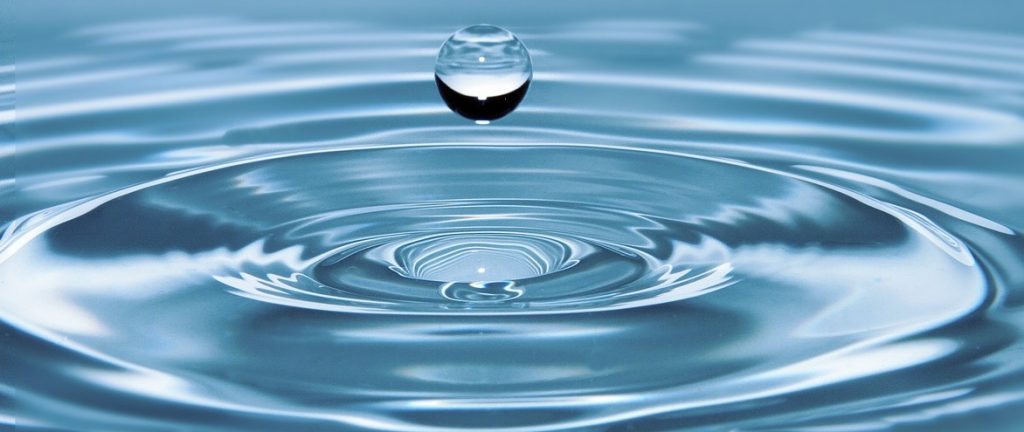
Water feng shui cures and remedies
Five elements model
The five elements/energies are symbols of the relative attributes of manifestations of energy – physical and mental. This is the backbone of Chinese medicine and astrology. The five-element theory describes five elements or energies that are important for life ie water, wood/tree, fire, earth and metal. There are two cycles or energetic movements: one creative and supportive and the other which is controlling. The water element supports a wood/tree element.
Think of them symbolically. In your work, start to distinguish between the physical energies of water, tree, fire, earth and metal and the symbolic representation of that energy. For example, a wooden, curvy chair is made of the physical energy of the tree and can symbolically a water quality because of its shape. A metal spoon is made up of the physical energy of metal and has a water quality because of its shape. A fountain is physically made up of water but symbolically has tree/wood energy because of its uplifting movement. Observe these energies around you and the people whom you are visiting. How have these energies served a positive role in people’s lives? Invite these energies to come alive in your own home.
The Water element can be represented by actual water or symbolic images or symbols. Some physical objects have the quality of water; for example, glass and mirrors are the quality of water.
Rivers
The significance of rivers from ancient Egypt to today have been researched extensively. Rivers, such as the Amazon, the Nile, the Tiber, and the Thames, shaped our world in many ways, built kingdoms and also destroyed civilisations. The first settlements and societies originated along rivers such as the Nile, the Tigris and the Euphrates. Water appeared on this planet some four billion years ago and since then provided natural capital, access (political control), transportation, territory (the Rio Grande between the US and Mexico), wellness and power (China’s Three Gorges Dam). In short, rivers factually and metaphorically mean power and prosperity. How rivers made history, read Rivers of Power: How a Natural Force Raised Kingdoms, Destroyed Civilizations, and Shapes Our Worl by
“The tree that is beside the running water is fresher and gives more fruit.”
Saint Teresa of Avila
Water in the bagua model = opportunities and career prospects
The career, vocation and opportunity sector in the bagua model is represented with the water element. This is the first place to look when you need more opportunities and career prospects.
Water enhancement/curies/remedies
Water features such as fish tanks, fountains, ponds, birdbaths, etc will enhance and boost the water bagua sector, which is an important area of life. If the actual water can’t be used, the symbolic or pictorial images of water can be used successfully used there too. Posters or pictures with water, rivers, lakes or koi carp points are excellent remedies to boost your opportunities and career prospects.
Water features in feng shui
Water features in your garden or home can enhance the water element in your environment. A well-placed water feature in your garden can act as a focal point, add more intrigue and mystery as well as lessen the noise of urban living. Moving water will make your home or garden more alive – full of positive chi. The sound of moving water can have a calming effect. There are many types of water features, such as metal, glass, stone, crystal, marble, and so on and these can make different water sound effects such as almost silent, drip, trickle, dribble and natural brook sounds. Make sure that you can live with these sounds and that you can adjust the pump to the right level for you. There are three types of garden water features: wall-mounted, ground-levelled and freestanding.
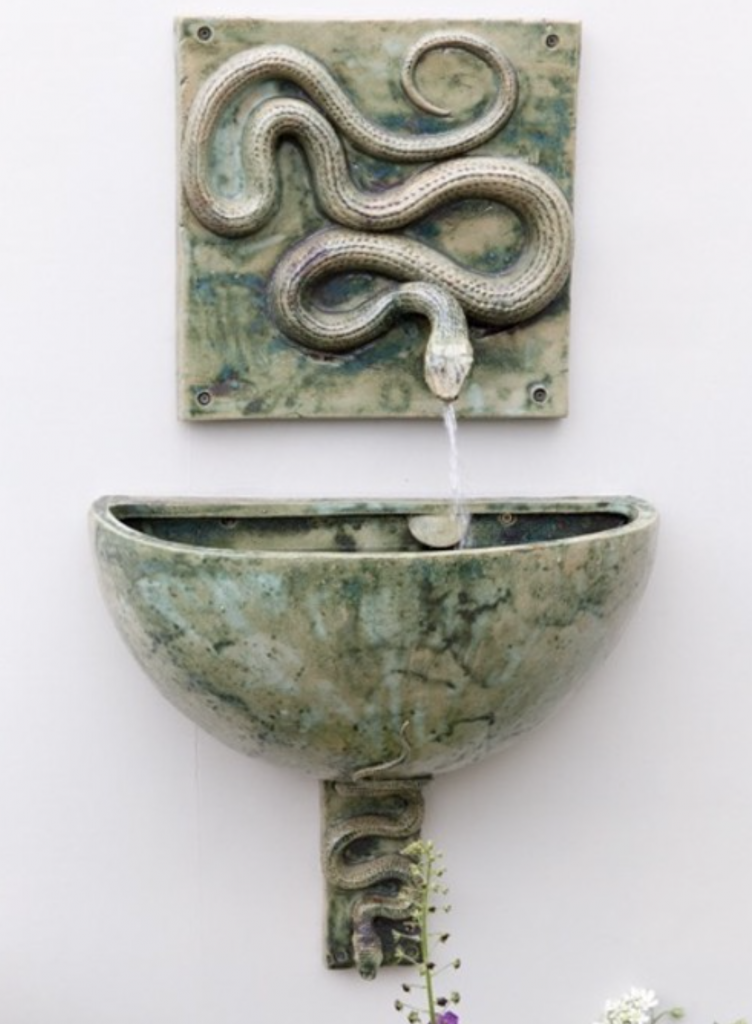
Water features in feng shui
Water features are not ponds, so practical considerations are important: pump breaks, water evaporation, electricity cables on show, etc – there are solar power water features which solve the problem of electrical cables. Invest in a good quality water feature that will last.
Examples of water features:
Inexpensive: Gardman Sandstone Swirl Water Feature
Expensive ceramic water features
Inexpensive to an expensive range of 500 water features
Grand water features for large gardens
Expensive water features
Water = opportunity
Why does water represent opportunities? Opportunity is a blessing presented to you and for you to take advantage of. Water is fluid and curries chi /qi/prana/charge. Watch the clip below to see how charge (chi/qi) affects water and moves it. Water attracts charge and energy, so you can use your body-mind-soul can use it for manifestation.
Mirrors = water element
One way that water expands your opportunities is through its expanding energy. Mirrors have the quality of water element and they expand space. So if you can’t have water features or water images, place a mirror there. You can use full-size mirrors or little ornamental mirrors to expand space (and opportunities) or attract extra energy respectively.
How to use water feng shui adjustments?
Depending on your needs and wants, you can use water element differently in different areas of the bagua in your home or workplace.
1) Decide on what you want.
2) Check which areas of the bagua would be appropriate for your water intervention.
3) Choose the best water remedy ie water feature, water image, mirror or object with the water quality.
4) If you’re into nature’s cycles or astrology, you can choose the best date for your feng shui intervention. The general rule of thumb for boosting opportunities – do it when the moon is waxing (getting bigger) and when you want to drain or negate certain aspects of your life, do it during the waning phase of the moon cycle.
5) Observe and notice the results. Remember: feng shui = intention + energy + ritual. If you’re not getting the results you want, check first if that’s you and your energy and your mindsets that might be blocking the manifestation. Very seldom, it’s the ritual that is to blame for the lack of results.
What if I don’t like the water features or it’s not possible to have them?
There are many ways of washing dishes and the same applies in feng shui. You can find something that works for you and is in harmony with the decor of your home or workplace, and is your personal preference. Water images, such as rivers, sea, lakes, etc, as well as fish, have similar quality of the water element.
Dehardation
On your feng shui body level, hydration is very important for keeping the water element working on all levels and boosting your chi/energy.
Experts estimate that up to 75 percent of the population is dehydrated and dehydration contributes to:
- low energy, fatigue
- brain cells shrivelling up
- enlarged ventricles
- brain working harder with poor results
- impaired cognition and attention
- forgetfulness and speech problems
Watch this video below where Dr. Dana Cohen, author of “Quench: Beat Fatigue, Drop Weight, and Heal Your Body Through the New Science of Optimum Hydration.” on how to beat fatigue and heal your body through optimum hydration. Or read/download the transcript of the interview.
Blessing Water: Rituals, Traditions, and Feng Shui Perspectives
Water has always been recognised as one of the most sacred and life-sustaining elements. In the context of feng shui, which literally means wind-water, water embodies the flowing, life-giving energy that connects the material and spiritual worlds. Blessing water is a universal practice across cultures, representing purification, renewal, and alignment with higher energies. The following blog explores diverse traditions of water blessings, their symbolic meanings, and their integration with feng shui philosophy.
Key Rituals for Blessing Water
Catholic Holy Water Blessing
In the Roman Catholic tradition, the formal rite known as the Blessing of Holy Water is performed by a priest, typically using prayers from the Rituale Romanum. This process involves the exorcism and blessing of salt, which is then mixed with water. The act is believed to provide spiritual protection, healing, and purification. Holy water is used in baptisms, blessings of homes, and personal devotional practices.
Hindu Blessing of Water (Abhishekam, Aachaman)
In Hinduism, water plays a central role in both personal and communal rituals. The Abhishekam ceremony involves bathing sacred images or deities with purified water while reciting mantras, symbolising the flow of divine grace. Aachaman, a personal purification ritual, uses sips of sanctified water to cleanse body and spirit. These practices reflect the belief that blessed water strengthens spiritual purity and fosters divine connection.
Shinto Water Rituals (Misogi)
In Japanese Shinto, purification by water is central. The Misogi ritual involves standing under waterfalls or immersing in rivers to wash away impurities, both physical and spiritual. At shrines, visitors use temizuya, water basins, to cleanse their hands and mouths before worship, acknowledging water as a medium of renewal and spiritual clarity.
Indigenous and Earth-Based Ceremonies
Among many Indigenous peoples, water ceremonies acknowledge water as sacred and life-giving. Elders often lead these gatherings with prayers, songs, and offerings, emphasising gratitude and ecological stewardship. Sweat lodge rituals also use water poured over heated stones to generate purifying steam, promoting healing and spiritual renewal.
Buddhist Lustral Water Blessings
In Theravāda Buddhist traditions, monks chant protective verses (paritta) over water, transforming it into blessed water. This lustral water is sprinkled on devotees or drunk for health, protection, and merit. The ritual symbolises the infusion of spiritual power into the water, which is then shared communally.
Jewish Mikvah Ritual
Judaism prescribes the mikvah, a ritual bath for purification. Immersion in the mikvah is a requirement for conversion, post-menstrual purification, and before certain religious observances. The practice reinforces the symbolic role of water as a medium of rebirth, renewal, and holiness.
Sikh Amrit Sanskar
In Sikhism, Amrit (holy nectar) is prepared by stirring water and sugar with a double-edged sword while reciting sacred hymns. Participants drink and are sprinkled with Amrit during initiation into the Khalsa, signifying spiritual rebirth and commitment to the Sikh way of life.
Islamic Zamzam Water
In Islam, the Zamzam well in Mecca is believed to provide divinely blessed water. Pilgrims drink it during Hajj or Umrah and bring it home as a source of blessing and healing. Zamzam water is deeply connected with narratives of divine providence and faith.
Modern and Personal Blessing Practices
In contemporary non-sectarian contexts, water is blessed by speaking positive intentions, prayers, or affirmations over it. Some practitioners visualise light entering the water, while others use crystals or herbs. These practices draw from ancient traditions but adapt them to individual spirituality.
Comparative Table of Water Blessing Rituals
| Tradition | Main Ritual | Core Elements |
|---|---|---|
| Catholicism | Blessing of Holy Water | Priest’s prayers, exorcism, salt & water mixing |
| Hinduism | Abhishekam, Aachaman | Poured water, mantras, divine invocation |
| Shinto (Japan) | Misogi, Temizuya | Immersion/cleansing, hand-washing, shrine rituals |
| Indigenous (Americas) | Water Song Gatherings | Songs, Elder-led blessings, communal prayers |
| Buddhism | Lustral Water Ceremony | Monks’ chants, sprinkling, protective prayers |
| Judaism | Mikvah | Full-body immersion, ritual purity |
| Sikhism | Amrit Sanskar | Sacred water stirred with sword, hymns, initiation |
| Islam | Zamzam Water | Drinking, healing, pilgrimage connection |
| Modern/New Age | Intentional Blessing | Spoken intentions, visualisation, crystals, herbs |
Feng Shui and the Blessing of Water
Feng shui highlights the profound role of water in directing energy flow. Water features, such as fountains, ponds, or aquariums, are considered vital tools for enhancing chi when placed correctly. Blessing water in this context reinforces its role as a carrier of life force and prosperity. For example, blessing the water in a fountain near the entrance is believed to attract abundance, while blessing water in the kitchen supports health and nourishment. These acts resonate with the broader global traditions of recognising water as sacred, bridging feng shui with wider cultural practices.
Anthropological and Critical Perspectives
Anthropologists argue that sacred water rituals function as more than symbolic acts; they constitute systems of meaning that influence ecological and social behaviours. Critics highlight that while claims of physical transformation of water remain scientifically unsubstantiated, the rituals serve important cultural, psychological, and communal functions. They promote ecological awareness, reinforce group identity, and mark spiritual or life transitions.
Conclusion
Blessing water is a deeply cross-cultural phenomenon, integrating spiritual, ecological, and social dimensions. From Catholic holy water to Hindu Abhishekam, Shinto misogi, and Indigenous water songs, the practice reflects humanity’s reverence for water as sacred. Within feng shui, blessing water aligns with its foundational meaning of wind-water, embodying harmony between flow and stillness, spirit and matter. Whether through ancient rites or modern affirmations, blessing water continues to remind us of its role as a conduit of life, renewal, and connection.
Clean water and feng shui: caring for the water you actually use
From the symbolism of water to its everyday quality
Working with the water element can go beyond fountains, mirrors and images of flowing rivers. A practical way to honour water is to pay attention to the water you drink, cook with and use throughout your home. Alongside its symbolic connection with opportunity and prosperity, water deserves ordinary, practical care.
This does not mean assuming that tap water is unsafe or that every household needs an expensive filtration system. The Drinking Water Inspectorate advises that public drinking water in England and Wales is closely monitored and generally does not require additional household treatment for health reasons. The sensible starting point is understanding your own water supply and choosing treatment only where it serves a clear purpose (Drinking Water Inspectorate, n.d.).
What can contaminate drinking water?
Water quality depends on its source, treatment, distribution and the plumbing through which it reaches your glass. Potential contaminants include microorganisms, agricultural and industrial pollutants, naturally occurring substances such as arsenic, and lead released from plumbing materials. The World Health Organization identifies microbial contamination as the greatest global drinking-water safety risk, while also recognising important chemical hazards (World Health Organization, 2023).
Toxic metals deserve attention because sufficient exposure can affect health, including neurological function. A systematic review found associations between heavy-metal exposure and poorer cognitive function in adults. However, this does not establish that ordinary tap water was responsible for the exposures or outcomes in every study (Althomali et al., 2024). The important questions are which substances are present, at what concentrations, and through which sources people are exposed.
Chlorine and fluoride: understand their purpose and the evidence
Chlorine and fluoride should not simply be grouped with lead or industrial pollutants. Chlorine is used to control harmful microorganisms, while fluoride can help prevent tooth decay. Whether treatment is desirable depends on the substance, its concentration and the purpose of filtration (Centers for Disease Control and Prevention [CDC], 2024).
Research on residual chlorine has examined its effects on freshwater microbial communities and the intestinal microbiota of zebrafish. These findings do not establish that drinking chlorinated tap water harms the human gut microbiome. Findings from environmental and animal studies need to be distinguished from evidence about human drinking-water exposure (Zhang et al., 2022).
Similarly, a systematic review associated higher fluoride exposure with changes in thyroid markers, but it does not establish that every fluoridated water supply causes thyroid disease or that everybody should remove fluoride (Iamandii et al., 2024). Before purchasing specialist filtration, check your water supplier’s information rather than treating “fluoride-free” as an automatic measure of water quality.
Pharmaceutical residues: a reason for monitoring, not exaggerated claims
Pharmaceutical residues have been detected in drinking water. A systematic review covering 124 studies found that 91 reported at least one detectable pharmaceutical, while 33 did not detect their target substances. The findings support continued monitoring and improvements in water treatment where needed (Zanni et al., 2025).
However, detecting a medicine is not the same as demonstrating exposure to a harmful dose. This review does not establish that the trace concentrations commonly reported in drinking water cause endocrine disruption, reproductive problems or developmental disorders in consumers. These are questions requiring exposure-specific evidence, not conclusions that can be drawn from detection alone (Zanni et al., 2025).
Bottled water and microplastics
Bottled water is not automatically a purer alternative. Using a highly sensitive imaging method, researchers studying three bottled-water brands estimated an average of approximately 240,000 microplastic and nanoplastic particles per litre, with around 90% classified as nanoplastics (Qian et al., 2024). These findings attracted attention because the method detected particles that older techniques could miss.
The result needs context: it concerned a small selection of brands, was dependent on the measurement method, and did not demonstrate that consuming those bottles caused disease. It should not be presented as the particle count in every bottle of water. Nevertheless, it provides a reasonable basis for questioning the assumption that bottled water is necessarily free from plastic particles (Qian et al., 2024).
The practical response is informed choice, not fear: consider your water source, the suitability of any filtration and the cleanliness of your drinking container.
Choosing a drinking-water filter
Start with your water supplier’s postcode-based water-quality report. Where there is a specific concern about household plumbing or a private supply, appropriate testing may be needed. Appearance, taste and smell alone cannot reliably establish whether water is safe (Drinking Water Inspectorate, n.d.; CDC, 2024).
For a household that needs treatment specifically for drinking and cooking, a filter at the kitchen tap is a sensible option to consider before a whole-house installation. Match its verified performance to the problem, rather than choosing by price or the number of filtration stages advertised (NSF, n.d.-a).
| Your main concern | Filter type to consider | Certification or performance to check |
|---|---|---|
| Chlorine taste or odour | Activated-carbon jug, tap-mounted or under-sink filter | NSF/ANSI 42, with a chlorine-reduction claim |
| Lead | A drinking-water filter specifically certified for lead reduction | NSF/ANSI 53, with the exact lead-reduction claim |
| Fluoride | Reverse osmosis where justified | NSF/ANSI 58, with an explicit fluoride-reduction claim |
| Particular pharmaceutical residues | A system tested for the substances of concern | NSF/ANSI 401, checking the named substances covered |
These standards address different functions. Certification must cover the exact model and the particular reduction claim; a certification number does not mean that a filter removes every contaminant (NSF, n.d.-b).
Do not assume that a standard carbon jug removes fluoride. Check the specific cartridge’s performance. Reverse osmosis can reduce a wider range of dissolved substances, but it is not automatically necessary for a compliant mains supply (CDC, 2024).
The Drinking Water Inspectorate cautions against routine domestic reverse-osmosis use. Where it is justified, seek advice about installation requirements, maintenance, changes to mineral content and water use, rather than treating it as a universal upgrade (Drinking Water Inspectorate, n.d.).
Whole-house water filters: useful when there is a whole-house need
A whole-house system treats water as it enters the property. Depending on the identified problem, an installation might include sediment filtration and an appropriately specified carbon filter. This can be worth considering when the treatment need affects several outlets rather than drinking water alone (NSF, n.d.-a).
Before buying, ask the installer to explain exactly what the system reduces, its performance at your household’s flow rate, any effect on pressure, and its ongoing servicing costs. A whole-house filter is not necessarily a complete drinking-water solution. For example, it cannot remove lead that enters the water from plumbing situated downstream of the filter. Correcting the plumbing problem, with suitable treatment at the drinking tap where necessary, is more directly targeted (Texas Commission on Environmental Quality, 2026).
Also distinguish filtration from softening. A water softener addresses hardness and limescale; it is not a comprehensive contaminant-removal system. The Drinking Water Inspectorate recommends retaining an unsoftened supply for drinking and cooking (Drinking Water Inspectorate, n.d.).
Shower filters: choose a realistic purpose
For reducing free chlorine in shower water, consider a shower filter certified to NSF/ANSI 177. This certification addresses free-chlorine reduction; it does not certify removal of fluoride, all metals, microorganisms or hardness minerals. Nor does it establish that the filter treats eczema, prevents hair loss or “detoxifies” the body (NSF, n.d.-b).
Ask a simple question before purchasing: What is this filter independently demonstrated to reduce under showering conditions? A long list of filtration stages is less useful than a clear, relevant performance claim.
Plastic bottles: make the container part of your water routine
For everyday use, consider a reusable glass bottle at home or food-grade stainless-steel bottle when travelling. Choose one designed for drinking water, with an opening and lid that are easy to clean. This is a practical way to reduce reliance on disposable plastic bottles, rather than a guarantee that the water contains no plastic particles.
Hygiene still matters. Wash reusable bottles and their lids thoroughly, follow the manufacturer’s cleaning instructions, and avoid repeatedly topping up a dirty bottle. Health Canada advises against continually refilling single-use bottles because inadequate cleaning can allow microbial contamination (Health Canada, 2023).
Store bottled water somewhere cool and clean, away from direct sunlight. Avoid blanket claims that all plastic water bottles contain BPA: PET, commonly used for single-use water bottles, does not contain BPA. Equally, “BPA-free” does not mean “microplastic-free” because these are different issues (Health Canada, 2023; Qian et al., 2024).
Maintenance matters more than impressive marketing
Whatever system you choose, make maintenance part of the decision. Follow replacement schedules, clean components as instructed and keep a simple record of servicing. Neglected equipment can compromise water quality rather than improve it. Where treatment addresses an identified contaminant, follow-up testing can help establish whether the system is performing as intended (Texas Commission on Environmental Quality, 2026).
A filter that is affordable to maintain is a more practical choice than an elaborate installation whose running costs or servicing requirements you cannot sustain.
A practical expression of the water element
Caring for water can become a grounded expression of feng shui: informed choices, clean containers, well-maintained equipment and thoughtful use of resources. Rather than focusing only on symbols of abundance, begin with something tangible: understand your water, address genuine problems and make everyday care part of your environment.
References
The U.S. Government Accountability Office report cited below is a historical US regulatory comparison published in 2009, not evidence about current UK bottled-water regulation.
Althomali, R. H., Abbood, M. A., Saleh, E. A. M., Djuraeva, L., Abdullaeva, B. S., Habash, R. T., Alhassan, M. S., Alawady, A. H. R., Alsaalamy, A. H., & Najafi, M. L. (2024). Exposure to heavy metals and neurocognitive function in adults: A systematic review. Environmental Sciences Europe, 36, Article 18. https://doi.org/10.1186/s12302-024-00843-7
Centers for Disease Control and Prevention. (2024, April 10). About choosing home water filters. https://www.cdc.gov/drinking-water/prevention/about-choosing-home-water-filters.html
Drinking Water Inspectorate. (n.d.). Domestic water filters and softeners. https://www.dwi.gov.uk/consumers/learn-more-about-your-water/domestic-water-filters-and-softeners/
Health Canada. (2023, December 18). Frequently asked questions about bottled water. https://www.canada.ca/en/health-canada/services/food-nutrition/food-safety/information-product/frequently-asked-questions-about-bottled-water.html
Iamandii, I., De Pasquale, L., Giannone, M. E., Veneri, F., Generali, L., Consolo, U., Birnbaum, L. S., Castenmiller, J. J. M., Halldorsson, T. I., Filippini, T., & Vinceti, M. (2024). Does fluoride exposure affect thyroid function? A systematic review and dose-response meta-analysis. Environmental Research, 242, 117759. https://doi.org/10.1016/j.envres.2023.117759
National Institutes of Health. (2024, January 23). Plastic particles in bottled water. NIH Research Matters. https://www.nih.gov/news-events/nih-research-matters/plastic-particles-bottled-water
NSF. (n.d.-a). Home water treatment. https://www.nsf.org/consumer-resources/articles/home-water-treatment
NSF. (n.d.-b). NSF standards for water treatment systems. https://www.nsf.org/consumer-resources/articles/standards-water-treatment-systems
Qian, N., Gao, X., Lang, X., Deng, H., Bratu, T. M., Chen, Q., Stapleton, P., Yan, B., & Min, W. (2024). Rapid single-particle chemical imaging of nanoplastics by SRS microscopy. Proceedings of the National Academy of Sciences, 121(3), e2300582121. https://doi.org/10.1073/pnas.2300582121
Texas Commission on Environmental Quality. (2026, April 10). Choosing home water treatment. https://www.tceq.texas.gov/drinkingwater/choosing-home-water-treatment
U.S. Government Accountability Office. (2009, June 22). Bottled water: FDA safety and consumer protections are often less stringent than comparable EPA protections for tap water (GAO-09-610). https://www.gao.gov/products/gao-09-610
World Health Organization. (2023, September 13). Drinking-water. https://www.who.int/news-room/fact-sheets/detail/drinking-water
Zanni, S., Cammalleri, V., D’Agostino, L., Protano, C., & Vitali, M. (2025). Occurrence of pharmaceutical residues in drinking water: A systematic review. Environmental Science and Pollution Research, 32, 10436-10463. https://doi.org/10.1007/s11356-024-34544-8
Zhang, Z., Zhang, Q., Lu, T., Zhang, J., Sun, L., Hu, B., Hu, J., Peñuelas, J., Zhu, L., & Qian, H. (2022). Residual chlorine disrupts the microbial communities and spreads antibiotic resistance in freshwater. Journal of Hazardous Materials, 423, 127152. https://doi.org/10.1016/j.jhazmat.2021.127152
Read about wood/tree element in the theory of five elements
If you’re not sure how to use the water enhancements in feng shui – call your feng shui expert or me on +44 7956 288574