
Art, music, coffee, chocolate cake and feng shui
Vienna is home to Mozart, Hayden, Beethoven (2020 marks 250 years since the birth of Beethoven), Strauss and other musicians as well as the birthplace of the sowing machine, slow motion, psychoanalysis, croissant (not Paris) and the snow globe (yes, Schneekugeln was invented in Vienna over hundred years ago and there is a museum to prove it).
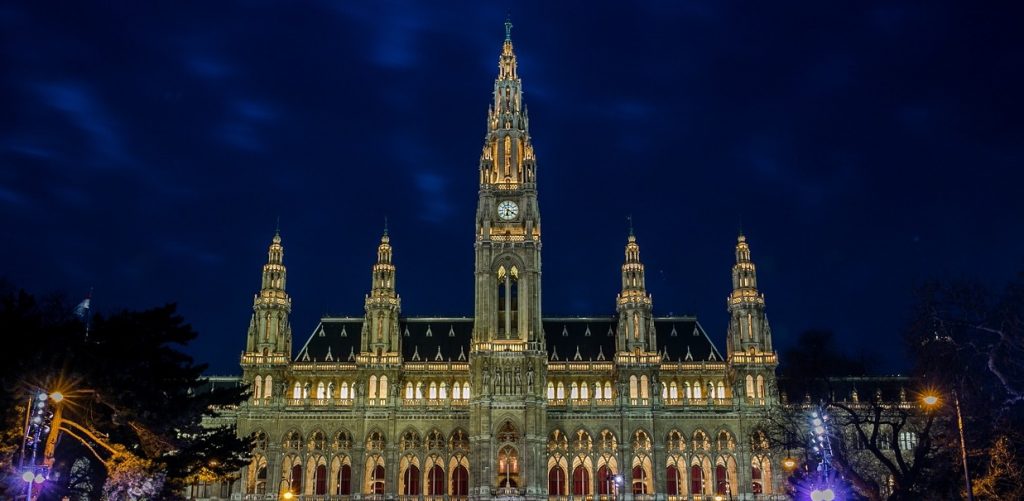
Feng Shui of Vienna’s Town Hall
13 million tourists flock to Vienna every year. About 2 million people live happily and comfortably in Vienna, which has been voted the most livable city in the world for several years now (five times until 2019). Is it something to do with the feng shui of Vienna? I’m going to find out.
How to get to Vienna
Vienna is easy to reach from across Europe by train, coach and flights, but train travel offers the most atmospheric way to glide straight into the historic centre. High-speed and intercity trains sweep you in from Paris, Munich, Prague, Budapest and Warsaw, turning the journey into part of the adventure rather than a chore. Luxurious overnight sleeper trains let you settle into your compartment, fall asleep as the countryside slips by and wake up in Vienna’s grand railway station, already in the mood to explore. From there, you can roll on to Venice on another sleeper train, or branch out to Bratislava, Salzburg, Milan, Zurich and Berlin, stitching together a continuous ribbon of railway journeys that feels like travelling inside the story rather than just hopping between its chapters.
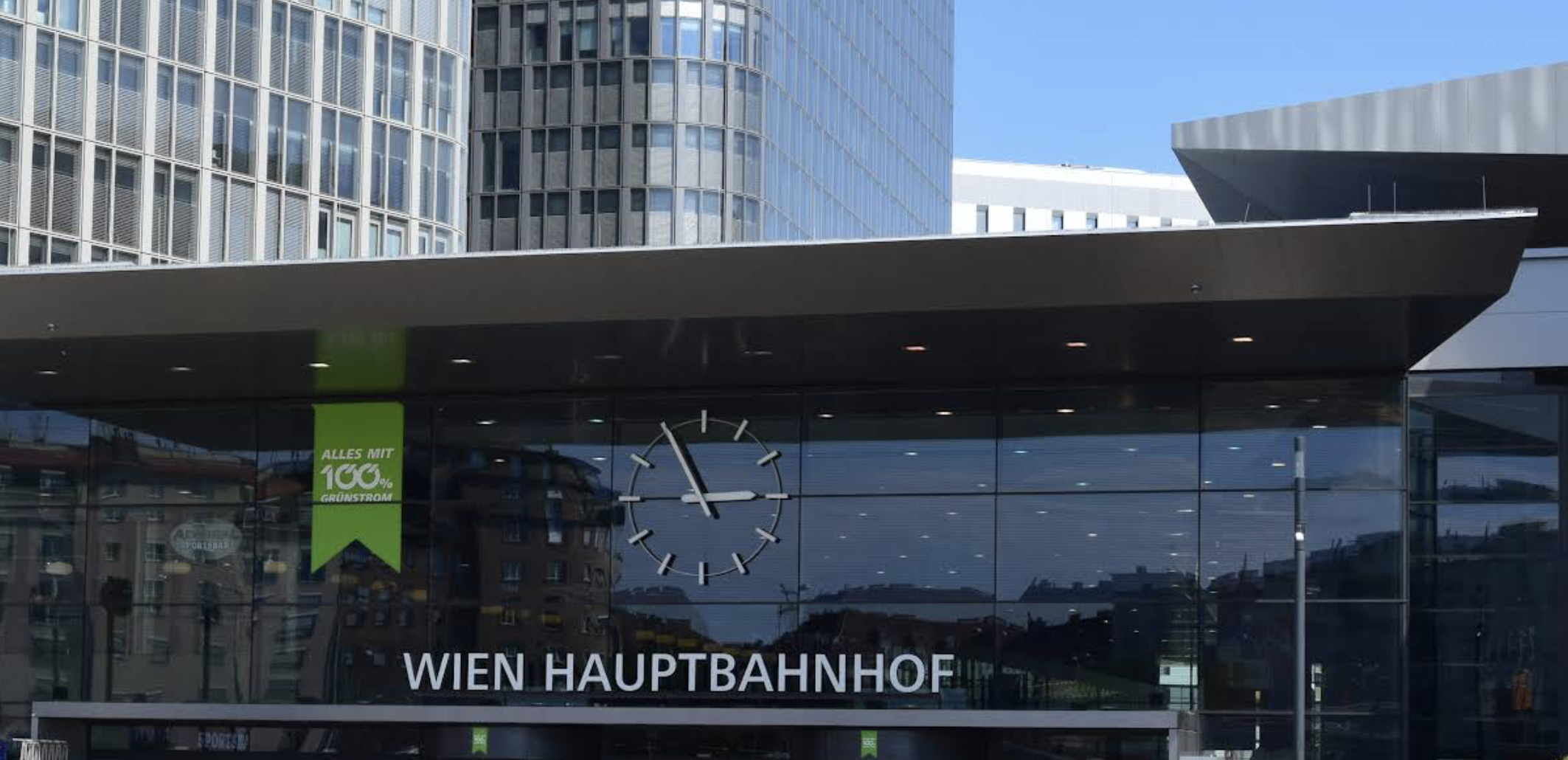
Travel to Vienna by train or sleeper train
Vienna’s architecture
Architecture in Vienna is very opulent, which is very good feng shui for any feng shui expert or feng shui enthusiast. Vienna City Hall, The Belvedere Palace, The Vienna State Opera House, Kunsthistorisches Museum, Maria-Theresien-Platz, The Albertina, Natural History Museum (Naturhistorisches Museum), The Austrian Parliament Building and the superb National Theatre (Burgtheater) are good examples.
Vienna is full of Baroque and Rococo palaces, and be advised, there is so much gold leaf, porcelain, elaborate details, and old paintings can take.
“with no appreciation of art or pleasure in form was unimaginable … You were not truly Viennese without a love for culture.” Stefan Zweig, the Austrian novelist and journalist
History and Vienna
The predecessor energy (chi) is very present in Vienna, which has over a hundred museums if you’re into history and art. The current Freud Museum, which was Sigmund Freud’s home/office between 1881 and 1938, attracts about 80 000 visitors/year. The feng shui of Freud’s home/office is very revealing, if you excuse my pun.
Five elements in Vienna
Water in Vienna can be experienced at the Donner Fountain on Neuer Markt, the playful fountains along Kärtner Strasse, the Danube Canal promenades and, more dramatically, through engagement with the Danube itself via river cruises or battery-powered floating platforms. On the other hand, the Viennese city sewers offer a different feel for the city. There is an actual tour you can take if you can stomach the smell, but you’re a fan of the film The Third Man. Europe’s second-longest river, the Danube (after the Volga), flows through Vienna (as well as 10 countries and four capitals). To enjoy the chi of this river, you can hire a battery-powered floating island.
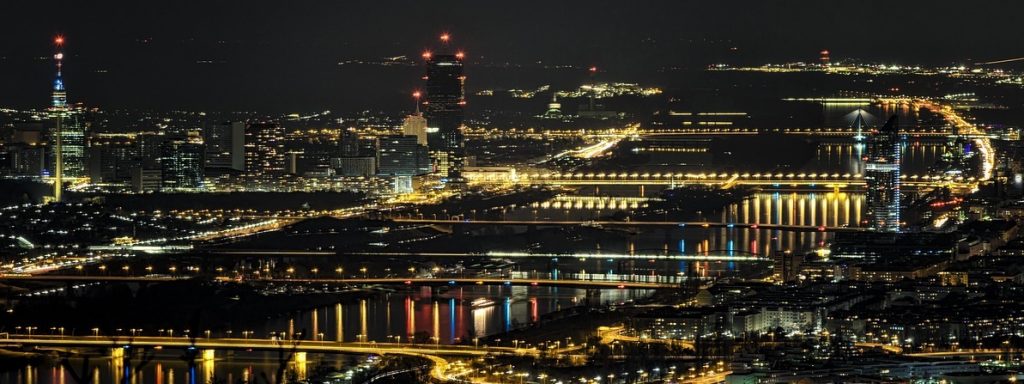
Feng Shui of Danube, Vienna
Wood is expressed in the Vienna Woods, the Prater park with its expansive lawns and tree avenues, the Stadtpark and Schönbrunn gardens, as well as the many street trees that soften the urban fabric and create green corridors of chi.
Fire comes to life in the evening atmosphere of the Ringstrasse, the illuminated façade of the State Opera, the vibrant interiors of traditional coffee houses such as Café Central or Café Sacher, and the energy of live performances in concert halls and theatres.
Earth is grounded in landmarks such as St Stephen’s Cathedral, the Hofburg and Belvedere palace complexes, the weighty façades along the Ringstrasse and the solid, enclosing feeling of older residential courtyards that offer a sense of shelter and continuity.
Metal is visible in the decorative ironwork of balconies and railings, the statues and memorials scattered through the city, the gleaming interiors of concert halls, and the ordered layouts of museums and formal squares that emphasise structure, refinement and clarity.
The energy flow in Vienna
Spiritual feng shui of Vienna
The spiritual, or more precisely the religious, side of Vienna is well represented by a number of churches with amazing interiors and exteriors, such as St. Stephen’s Cathedral, Karlskirche, the Imperial Crypt, the Capuchin Church, the Collegial and Parish Church of St. Peter, and the Franciscan Church of St. Jerome.
Nature and human-friendly house – Hundertwasserhaus
You can enjoy (from the outside, unless you know somebody living there) the famous ‘nature and human-friendly’ house, Hundertwasserhaus. This brightly coloured landmark on the corner of Löwengasse and Kegelstrasse was designed by painter Friedensreich Hundertwasser and completed in 1985. The main occupants of Hundertwasserhaus, unsurprisingly, are artists and intellectuals. While you’re there, explore the nearby Kunsthaus Wien, with a terrace café where you can enjoy the vibe before you do some shopping in the similarly styled shopping arcade.
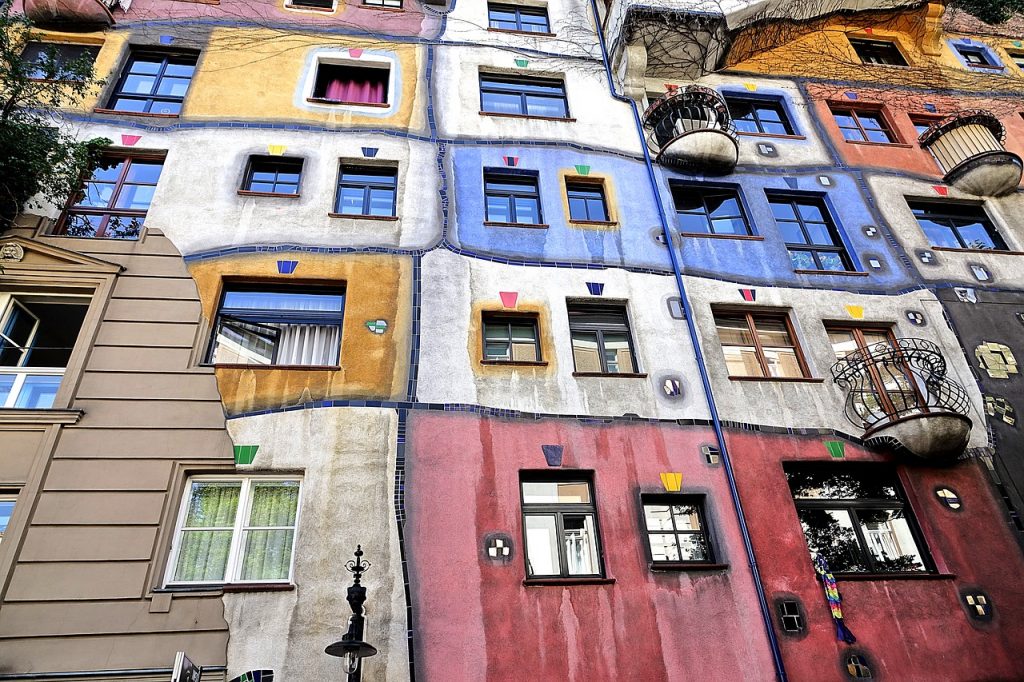
Feng Shui of Hundertwasserhaus, Vienna
The energy of food in Vienna
Naschmarkt is a historic market (dating back to the 16th century) popular with the Viennese and tourists. You can try traditional Sturm, partially fermented wine or traditional Käsekrainer sausages there, or if you’re into fine dining, go to the Famous Demel: Vienna’s Ultimate Café or better still, historic Cafe Central, which is my favourite, which was also popular with Trotsky, Tito, Lenin, Freud, as well as Hitler since 1876. The classic desserts are Apfelstrudel and Sachertorte. I also like Café Hawelka and Café Schwarzenberg (good for breakfast). Gemütlich (cosy) coffee houses are on virtually every street; you can walk the city with no particular route in mind, knowing you can always stop for a breather.
Vienna is very different from Barcelona or Berlin when it comes to going out. People still dress up when going out, read books in coffee houses, go to the opera, eat endless plates of apfelstrudel or Sachertorte and linger over a hot chocolate. Bliss if you’re into a more sedate way of life and looking for a refuge from life’s chores.
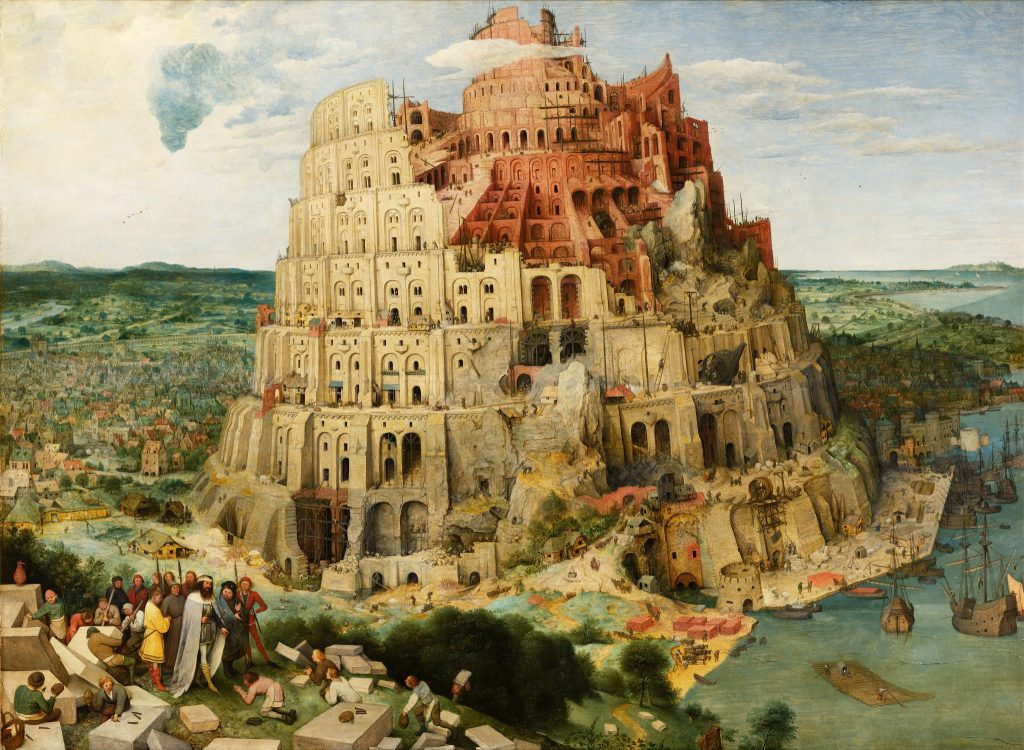
Tower of Babel, Kunsthistorisches Museum, Vienna
Famous people born or living in Vienna
Victor Frankl, Freud, Wittgenstein, Popper, Schoenberg, Carnap, and Klimt were born in or lived in Vienna.
Victor Frankl, in his book Man’s Search for Meaning, wrote, “Everything can be taken from a man but one thing – the last of the human freedoms – to choose one’s attitude in any given set of circumstances, to choose one’s own way.” We, human beings, imbue the world with meaning. We create ourselves. The purpose of life is just to create ourselves, to become more, among other things. We are human becomings… Frank also said, “Man should not ask what the meaning of his life is, but rather must recognise it is he who is asked.” In feng shui, we create meaning in our homes and workplaces with images, symbols, placement, colours and all the things we love and like. The act of creating a home from a house or building is part of the feng shui milieu. Victor Frankl walked the talk and, in his life, especially during his confinement in the concentration camp during WWII, has shown us that our attitudes toward our circumstances and environment can make or break us. Similarly, Nelson Mandela, during his 27 years of imprisonment, has shown us that feng shui is not the most important or influential thing in life. Our mindsets, worldviews, perspectives, and values are more powerful than the environment (feng shui). In feng shui, we have a saying, “Don’t put your life in feng shui, put feng shui in your life.” Feng shui is a very useful tool, and we all want to have nice, comfortable, and empowering homes and workplaces, so it has its place in our personal and professional lives.
Playfulness of Vienna
To balance the seriousness of Freud’s ‘discoveries’, the Viennese like to visit Prater, an amusement park (the location of the Oscar-winning British film noir directed by Carol Reed, The Third Man).
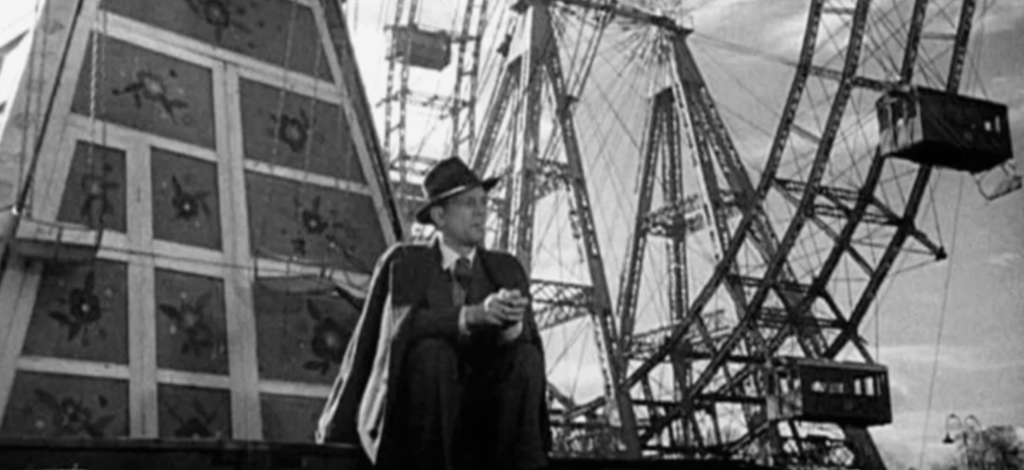
Prater, amusement park (location of the Oscar-winning British film noir directed by Carol Reed, The Third Man)
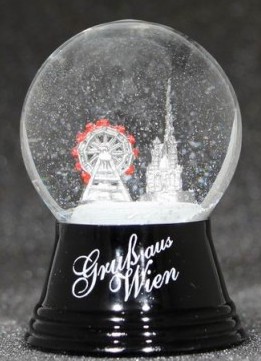
Snowball – feng shui remedy for travel from Vienna
Snowball – the ultimate feng shui remedy for the bagua travel corner
In 1900, Erwin Perzy I created the very first snowglobe, and his first design was the Basilica of Maria Zell, which contained snow made from ground rice. Since then, millions of people have enjoyed the magic of snowballs and use them as a feng shui travel remedy, which ideally should be placed in the bagua travel area of the home or workplace.
Feng shui consultants in Vienna, Austria
Feng shui is popular in Austria, and there are feng shui consultants in Vienna. But if you live in Vienna and are looking for a feng shui consultant near you – with 45+ years of experience in feng shui, vastu and environmental psychology, feel free to call/text me on +44 7956 288574 for a quote for feng shui consultation for your home or workplace. Although I live in London, I do remote feng shui consultations. Email me
Check my blogs about the feng shui of cities