How tiny pollinators, local honey and natural geometry can nourish our homes, bodies and the wider field of life
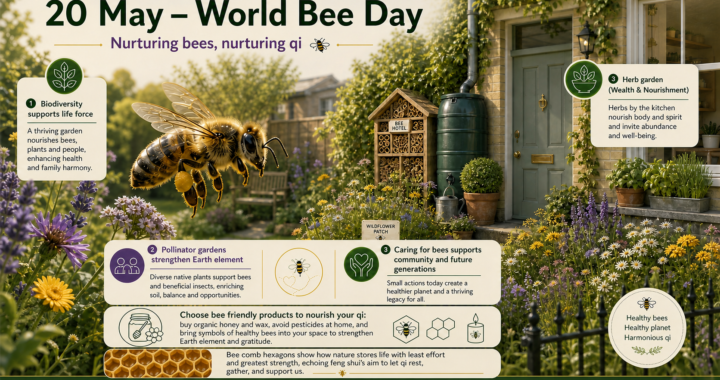
20 May is World Bee Day, a reminder that the tiny bodies of bees hold up a remarkable amount of our food system, our landscapes and, arguably, our collective wellbeing. The day was created to honour both the ecological importance of pollinators and the long relationship between humans and bees. For anyone interested in feng shui, environmental psychology or simply living well in place, bees offer a rich, tangible way to think about qi, reciprocity and design.
World Bee Day and why it matters
World Bee Day highlights the fact that bees and other pollinators are under pressure from habitat loss, pesticides, climate change and disease. Without them, many fruit, vegetable, nut and seed crops would suffer serious declines, and wild plant communities would lose an essential source of pollination. The day is also about empowerment: we do not have to be beekeepers to help bees. Small actions such as planting bee-friendly flowers, buying local honey, supporting organic farming and reducing chemical use all contribute to the larger web of support.
From a feng shui perspective, this is a reminder that qi is not confined to the inside of a house. The quality of energy in our homes is inseparable from the health of the wider landscape that feeds us. When we improve conditions for bees in our neighbourhood, we are indirectly tending the qi that eventually arrives on our plates and in our lungs.