
Wabi sabi is a Japanese art and philosophy of imperfection. Wabi sabi will free you from perfectionism. Research suggests that (most) people feel more comfortable and relaxed in slightly imperfect environments that may look a bit old, worn out or even shabby. The irregularity and, to some extent, fractality make us feel more relaxed and give us permission to be ok with imperfection and the transience of things.
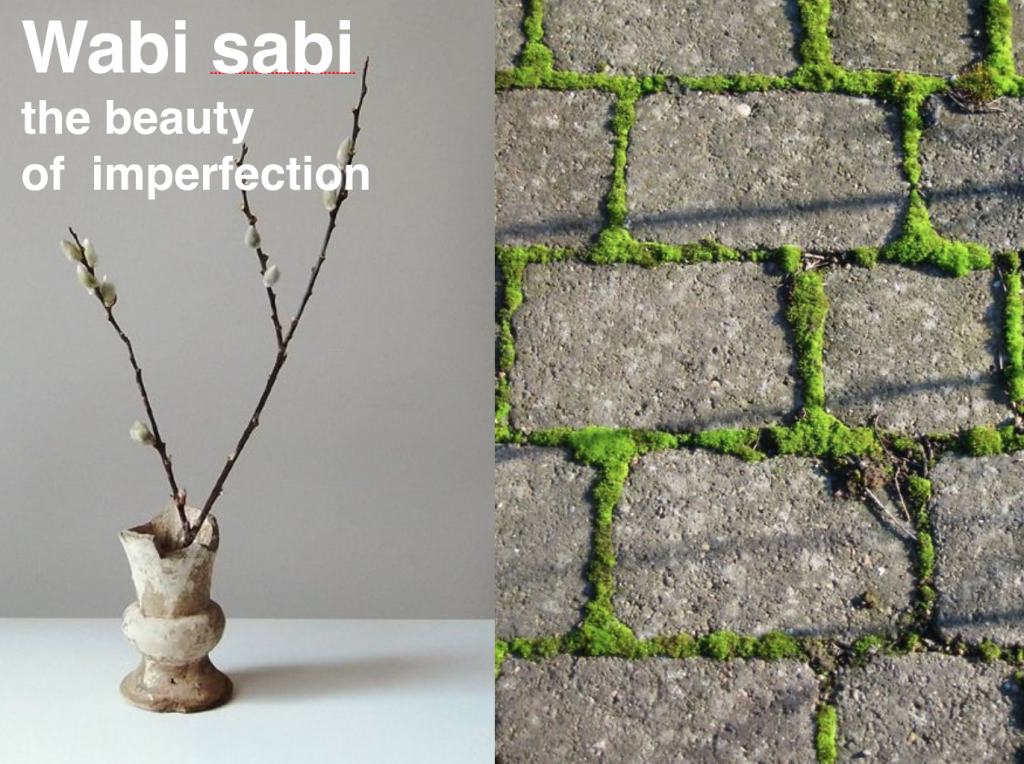
Examples of wabi sabi
Research also suggests that slightly messy environments foster creativity and ingenuity (Alexander Fleming got his idea for penicillin because he had a messy lab). Wabi sabi, to some extent, encourages and embraces a creative mess and clutter (which some feng shui schools demonise). It is also in line with the 80/20 rule (Pareto Principle), which states that 20% of effort should get you 80% of desired results. In short, don’t sweat the small stuff (if it’s unnecessary).
Many shops and workplaces now utilise wabi-sabi in their environments to encourage creativity, relaxation, embrace rustic themes, and save money on unnecessary redecoration.
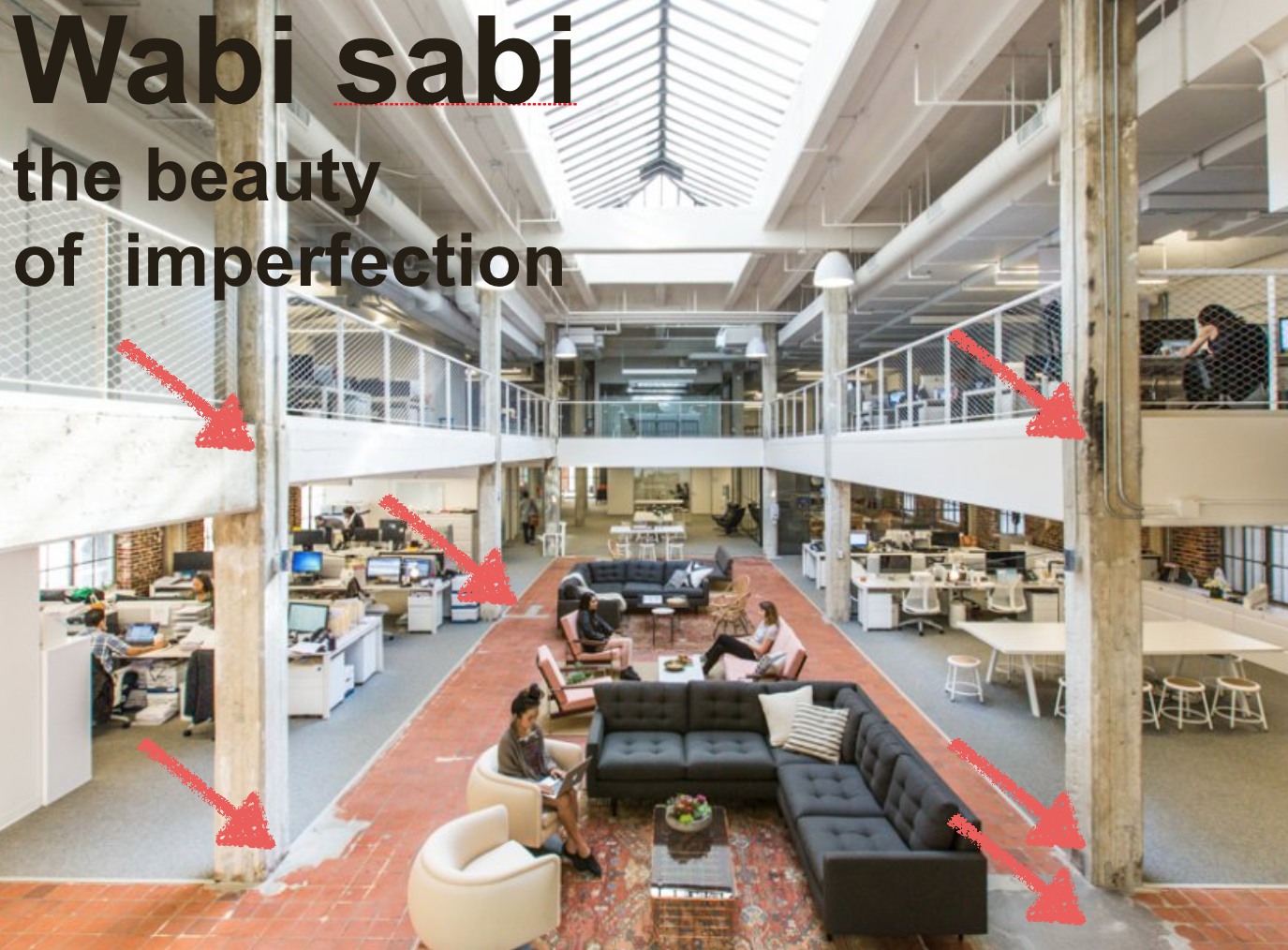
Examples of wabi-sabi in a workplace
And another example of wabi-sabi below

Another example of wabi sabi in a hotel in Bosnia
Wabi sabi links to another 500-year-old Japanese art form, kintsugi or “golden joinery,” where, instead of tossing old and broken pottery and ceramics, artists restore them with a lacquer mixed with gold, silver, or platinum. More examples of kintsugi
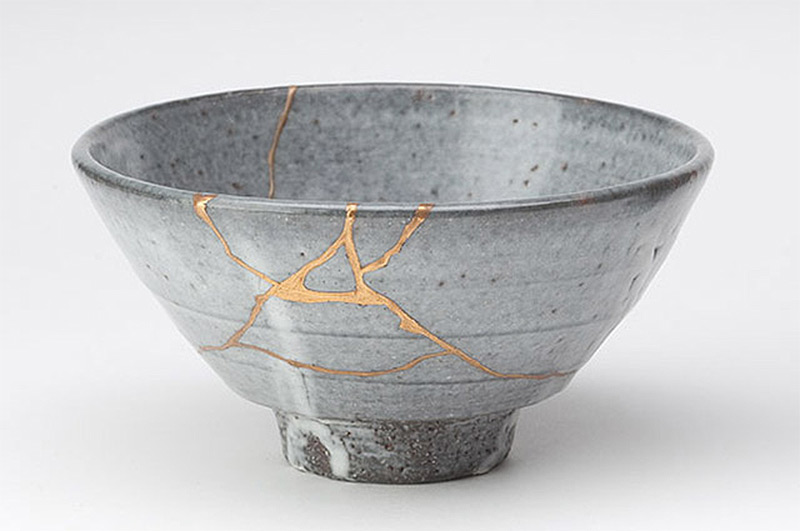
Kintsugi or ‘golden joinery’
Read about other Japanese lifestyle concepts are forest bathing / shinrin-yoku, kanso and danshari – another Japanese concept for decluttering
Niksen
Niksen, although it sounds Japanese, is actually a Dutch concept of simply doing nothing, being idle with no agenda, no purpose – just fiddling around or pottering around aimlessly. In a way, it is related to wabi sabi because of the non-doing aspect. In wabi sabi, we let nature or time do the job. And if it looks a bit messy or unfinished, the better. Niksen has nothing to do with mindfulness; when in mindfulness, the purpose is to let go of your thoughts and be present. Niksen has no purpose at all. The World Health Organisation (WHO) has now recognised burnout as an occupational hazard, caused by chronic workplace stress. Niksen is the solution. Although niksen sounds easy – you just need to be aimless, but actually, it requires consciously letting go of perfectionism (wabi sabi is anti-perfectionism) and needing to be productive and achieve something all the time. Niksen is similar to the Icelandic concept of petta reddast.
Examples of instinctive niksen include staring out the window, going for a walk without a set route, sunbathing, or just listening to random music. Dutch score high on the contentment scale and are in fifth place in the UN’s World Happiness Report (the UK ranked 15th), with teens ranking among the highest in the world for life satisfaction. When you put niksen into practice, you definitely will have to slow down – there is nothing to do. Start with a short session of niksen, just look outside the window for 2-5 minutes. Or just have a 12-20-minute nap. Research and common wisdom suggest that when you’re idle for a while, you will ultimately become more creative and productive. Also, your decision-making will improve as the Dutch social psychologist Professor Ap Dijksterhuis of Radboud University in Nijmegen suggests. So, if you already work smart, rest smart, and practice niksen, it’s a wise move toward the next level of happiness.
Kansō. What Kansō Actually Is. Kansō vs Fusui. Japanese Feng Shui.
Fūsui: Japan’s Timeless Art of Harmonious Placement (Japanese Feng Shui)