Deleuze, Chance and the Living Space: Radical Questions for Spiritual Environmental Practice

Today marks the 30th anniversary of the death of Gilles Deleuze, the renowned French philosopher whose work continues to inspire explorations across a wide range of disciplines. Deleuze’s innovative concepts, such as multiplicity, becoming, and the rhizome, encourage me to approach my relationship with space in new and imaginative ways. His idea of rhizomatic thinking, which values non-linear connections, networks and openness to transformation, aligns closely with the holistic and dynamic approach of feng shui. Deleuze’s philosophy pushes me to see my environment not as a static backdrop but as an active field of possibilities, ever open to reconfiguration and creative engagement. These resonances between Deleuze’s thought and feng shui prompted me to reflect further in this blog.

Feng shui, as a Chinese metaphysical philosophy, centres on the harmonious arrangement of spaces to optimise the flow of qi and support well-being. It is deeply rooted in ancient cosmology, balancing the dynamic interplay of yin and yang and the five elements within terrestrial and celestial environments. Deleuze’s philosophy, on the other hand, emerges from twentieth-century continental thought, foregrounding the fluidity of being, the importance of difference and repetition, and the affirmation of multiplicity and becoming. Both traditions value process, transformation and the ongoing creation of new realities, but their metaphysical foundations differ: feng shui privileges cosmic harmonisation and resonance, while Deleuze focuses on experimental assemblages, creative change and the vital energy of differentiation. Together, they invite me to treat my environment as a living field of possibilities, where both ancient wisdom and radical modern philosophy offer ways to think and act differently in relation to space.

In the discipline of feng shui, I often ask how to align my space to promote well-being. When I approach my home or working environment influenced by Gilles Deleuze, process-oriented questions open new directions for transformation. In this post, I explore how Deleuzean questions, rooted in affirmation, multiplicity and becoming, can reinvigorate feng shui and reveal the field as a living practice with our surroundings. I invite you to ask some of these questions in relation to your home and workplace.
Continue reading

Feng Shui Beyond Time and Space: A Radical Reimagining of Environmental Harmonisation

The Ancient Art Meets the Timeless Realm

For millennia, feng shui has been understood as the art and science of harmonising human environments with the flow of qi (vital energy) through careful attention to spatial arrangement, temporal cycles, and directional orientations. Traditional practitioners meticulously calculate compass bearings, assess landforms, and consider the temporal dimensions of the Chinese calendar to optimise environmental conditions. Yet what if the most profound aspects of feng shui lie not within the coordinates of time and space as we conventionally understand them, but in dimensions beyond these familiar parameters?

This exploration proposes a radical reconceptualisation of feng shui practice, drawing upon recent discoveries in theoretical physics, transpersonal psychology, and mystical philosophy to imagine feng shui as it might be practised in realms that transcend ordinary spatiotemporal coordinates. By examining positive geometry, the teachings of non-dual wisdom traditions, and the nature of consciousness itself, we can begin to articulate innovative approaches to environmental harmonisation that operate at deeper, more fundamental levels of reality.

Continue reading

Creating Instead of Criticising: Rethinking Philosophy of Feng Shui

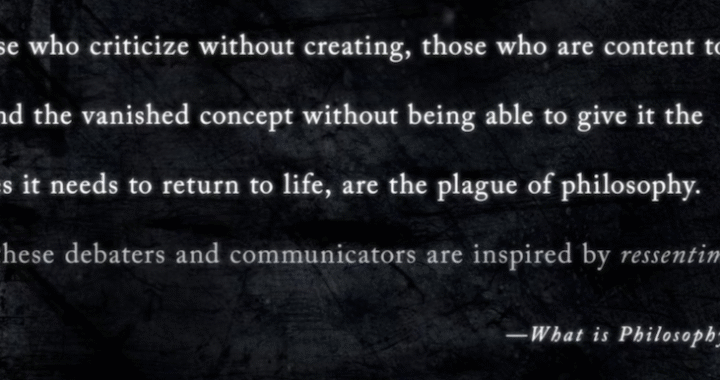
“Those who criticise without creating, those who are content to defend the vanished concept without being able to give it the forces it needs to return to life, are the plague of philosophy. All these debaters and communicators are inspired by ressentiment.”
What is Philosophy?

In Deleuze and Guattari’s eyes, philosophy stagnates when reduced to mere defence or reanimation of dead dogmas. They urge philosophers to create concepts, not just reflect upon or preserve them. This principle of creative production, as opposed to rote reproduction, stands as a vital challenge to anyone working with tradition, especially those of us immersed in ancient systems like feng shui.​

As a practising feng shui consultant and a PhD researcher in environmental psychology, this resonates deeply with my personal and academic journey. Feng shui is often discussed through its classical philosophical principles – chi, yin and yang, five elements, bagua, and intricate calendar cycles. But is there a risk in treating these ideas as fixed artefacts, immune to the creative forces that keep a tradition alive?

Philosophical Creation and the Living Nature of Feng Shui

Deleuze’s distinction between creative thinking and static reflection can reformulate how we approach feng shui today. Classical feng shui concepts were themselves products of creative synthesis by thinkers responding to their contexts—a process of invention far removed from static dogmatism.

Continue reading

How Feng Shui Can Help You Stay and Feel Safe and Secure. Why Home Matters?

Feeling safe and secure is critical to our health, development and success. Feng shui aims at creating safe, healthy and harmonious environments for working and living to allow us to thrive as well as feel happy and secure.

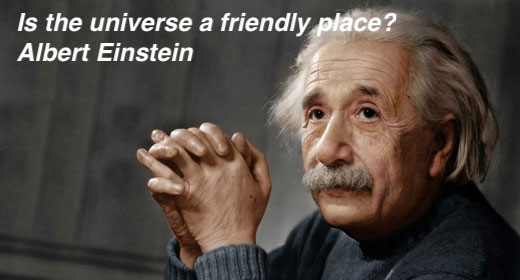
Albert Einstein asked this very potent and as always current question:
“I think the most important question facing humanity is, ‘Is the universe a friendly place?’ This is the first and most basic question all people must answer for themselves.

Is the universe a friendly place Albert Einstein

Is the universe a friendly place? Albert Einstein

Continue reading

Top Stories that Explain How Feng Shui Works

Storytelling has been around since the beginning of humanity, to help people to remember, learn and explain how things work and pass on timeless wisdom. These stories below explain how feng shui works. Enjoy.

Feng shui = intention + energy + ritual. These stories show that sometimes the intention and positive energy are enough to make a positive change and sometimes all three are required

Feng shui stories

Feng shui stories

The wicked feng shui master and a trusting woman

The story explains how the placebo effect works in feng shui.

Many centuries ago there was a feng shui master who was known for his skill but who was also easily moved to anger. One hot summer he was commissioned to assess a burial site in the mountain far from his home. It had taken him three days to walk to the site and a day to carry out his work. After sleeping in a small mountain shelter, he had packed his compass and papers and set off for the long journey home. On the second day, he had run out of water in the overbearing heat, but as he surveyed the fields of rice ready for harvest that lay across the plain before him, there was no sign of a well.

In the distance, he saw a woman and three of children working in the fields and so he headed in their direction. The woman stopped winnowing the long stacks of rice and her three sons lay down their scythes and baskets to stare at the strange.

Continue reading

Summary of Peg Rawes’ Space, Geometry and Aesthetics: Through Kant and Towards Deleuze

Space, Geometry and Aesthetics Through Kant and Towards Deleuze Renewing Philosophy

Space, Geometry and Aesthetics Through Kant and Towards Deleuze Renewing Philosophy

“Peg Rawes’ Space, Geometry and Aesthetics: Through Kant and Towards Deleuze delves into a unique exploration of aesthetic geometries within ontological philosophy. The work is rooted in a post-Kantian framework of aesthetic subjectivity, charting a path through geometric thinking and figurations such as reflective subjects, folds, passages, plenums, envelopes, and horizons. These concepts are explored across ancient Greek, post-Cartesian, and 20th-century Continental philosophies, offering insights into the construction of space and embodied subjectivities.

The book is structured around six chapters, each dedicated to examining ‘geometric’ texts from influential thinkers like Kant, Plato, Proclus, Spinoza, Leibniz, Bergson, Husserl, and Deleuze. Rawes highlights geometry as a profoundly embodied aesthetic activity, where each geometric method and figure is charged with aesthetic sensibility and sense, as opposed to being mere disembodied scientific methods.

Continue reading

Summary of The Poetics of Space by Gaston Bachelard

Summary of The Poetics of Space by Gaston Bachelard

Poetics of Space by Gaston Bachelard

The Poetics of Space by Gaston Bachelard

Bachelard takes us on a journey, from cellar to attic, to show how our perceptions of houses and other shelters shape our thoughts, memories and dreams. One of the best books on feng shui, environmental psychology, interior design and architecture and one of the best books that changed and transformed my life. A classic book – not suitable for speed reading.

“I should say: the house shelters day-dreaming, the house protects the dreamer, the house allows one to dream in peace.”
Gaston Bachelard, The Poetics of Space

The Poetics of Space by Gaston Bachelard was written in the last stages of Bachelard’s philosophical career and if focuses on the subjective perceptions of the house, its interior places and outdoor context. Bachelard’s reasons for writing this book is his philosophy on poetry. Poetry and metaphor are used to explain our relationship to space. The poetic imagery emerges into our consciousness as a direct result of the heart, soul and Being. Poets help us to discover the joy in looking, Bachelard suggests that image comes before thought. In this book, he expands his phenomenology of the soul, not the mind. In earlier work, he had tried to stay objective, true to science but he concluded that this approach was incomplete to explain the metaphysics of the subjectivity of imagination.

The house
Bachelard proposes that any inhabited space that has a notion of a ‘home’, has a function of a shelter to comforts us and protect. He sees the house as a maternal figure or container in which we contain our memories. Bachelard explores psychologically different aspects and feature of houses. For example, he makes a distinction between a doorknob and a key. Although a doorknob is used to close and open doors, the key is perceived more often to close and the doorknob more often used to open.

Continue reading

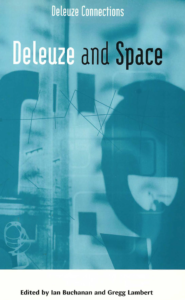
Summary of “Deleuze and Space,” edited by Ian Buchanan and Gregg Lambert

Deleuze and Space

Deleuze and Space

“Deleuze and Space,” edited by Ian Buchanan and Gregg Lambert, is a comprehensive exploration of the philosophical implications of space as conceptualised by Gilles Deleuze and further elaborated by various contributors. The book situates Deleuze as a significant spatial thinker, examining his and Félix Guattari’s ideas on the production of space, its conceptualisation, and its implications for subjects within various sociopolitical and cultural contexts. Through a collection of essays, the editors aim to elaborate on Deleuze’s spatial concepts, such as smooth and striated space, nomadology, and the Body without Organs, among others, applying these ideas to diverse fields ranging from architecture and urban planning to art, literature, and cinema.

The introduction by Buchanan and Lambert sets the stage for the collection, emphasising Deleuze’s contribution to understanding space not just as a physical dimension but as a complex conceptual framework influencing and intersecting with various aspects of life, thought, and creativity. The book argues that Deleuze offers a revolutionary way to think about space and spatial relations, challenging conventional notions and encouraging a reevaluation of how space is produced, perceived, and experienced.

Continue reading