
Feng Shui for Prosperity: 15 Practical Tips for Wealth and Abundance
Create a home and workspace that support financial wellbeing, welcome opportunity and help you move from surviving to thriving.
Feng shui for prosperity begins with a useful question: does your home support the life you are trying to create? Before buying another lucky object, look at the entrance you use every day, the desk where you work, the bedroom where you rest and the things that surround you. Are they helping you move forward, or are there simple changes waiting to be made?
My approach is to bring prosperity into the whole home, rather than confine it to one supposedly powerful corner. A welcoming entrance, a usable workspace, a flourishing plant and a carefully chosen book can each play a part. The aim is to connect your intentions with your surroundings and your everyday actions.
The following tips draw on my feng shui practice. Traditional associations are presented as feng shui symbolism, not guarantees of financial results. Start with changes that are useful, affordable and personally meaningful.
What do prosperity, wealth and abundance actually mean?
For this guide, prosperity means having the resources, opportunities and support to live well and develop what matters to you. It includes money, but also time, relationships, meaningful work, learning and the freedom to make choices.
Financial wealth concerns the resources you own, considered alongside what you owe. Income is money coming in; wealth is not simply how much you earn or how expensive your home looks. In a broader personal sense, you might also regard your knowledge, friendships, creativity and available time as forms of wealth.
Abundance, as used here, means recognising what is available and worthwhile, without pretending that resources are unlimited. An abundant home need not be crowded with possessions. It might contain fewer things, better used and more deeply appreciated.
Surviving means concentrating on immediate needs and getting through the next demand. Thriving means having some room for development, enjoyment, contribution and choice. These are working descriptions, not labels for judging people. Financial challenges are not proof of bad feng shui or the wrong mindset.
My article on wealth corners and prosperity discusses wealth beyond currency, including books, art, time, creativity and freedom (Cisek, 2008). Your first task is to decide which of these you actually want more of.
A practical feng shui principle: intention, energy and ritual
“FENG SHUI = INTENTION + ENERGY + RITUAL”
Jan Cisek, Feng shui tips
Use this as a framework, not a scientific equation. Intention means identifying what you want. Energy includes the traditional feng shui concept of qi and the qualities you experience in a space. Ritual means making a deliberate change that expresses your intention.
For example, clear your desk with the intention of completing a proposal, arrange what you need and then write the proposal. The environmental adjustment and the practical action belong together.
1. Give prosperity a clear, personal meaning
Write one sentence beginning: “A more prosperous life would allow me to…” Be specific. Perhaps you want to build a financial buffer, attract suitable clients, spend more time with your family, develop a skill or create room for a new business idea.
Now choose a place in your home that can support that intention. A comfortable reading chair can serve learning. A clear dining table can make space for conversation. An organised desk can become the place where you complete work rather than store unfinished projects.
Create a small card with your intention and one next action. For example: “I am developing a more sustainable working life. This week I will review my current projects and contact one prospective client.” Keep it where the action happens, rather than hiding it in a drawer.
Try today: identify one prosperity goal, one supporting place and one action. Do not start by changing every room. Start by making one connection between the life you want and the space you already have.
2. Make your front door welcoming and easy to use
Begin your practical feng shui review at the entrance. Walk towards your home as though visiting for the first time. Can you identify the door easily? Is the approach clear? Does the entrance feel cared for?
Clean the door and handle, remove unnecessary items from the threshold and check that the lighting works. Give shoes, coats, keys and deliveries somewhere appropriate to go. Keep the route through the entrance usable rather than creating an obstacle course.
You can treat this as a symbolic invitation to opportunity, but give it a practical expression. A business entrance should help visitors find you. A home entrance should make coming and going straightforward. Neither needs an expensive makeover.
In a rented flat, focus on what you control: your own doorway, the space immediately inside it and the daily accumulation of bags or post. Respect shared areas and keep access clear.
Try today: spend ten minutes improving the first metre inside your front door. Use something you already own before buying a new accessory.
3. Clear the clutter that gets in the way of prosperity
In my guide to feng shui and clutter clearing, letting go of excess is part of making space for what matters (Cisek, 2023). This does not mean turning your home into an empty showroom.
Start with clutter that obstructs a useful activity: a desk you cannot work at, a chair you cannot sit on or paperwork you cannot find. Choose one small area and sort its contents into things to keep here, move elsewhere or responsibly release.
Ask: “Does this item serve a purpose, express something I value or genuinely belong here?” A treasured collection is not automatically clutter. Equally, something expensive does not deserve permanent space simply because you once paid for it.
Complete the task. Put the useful items away, arrange the donation and remove the recycling. Moving an unwanted pile from the desk to the bedroom floor does not resolve the obstruction.
Try today: clear one working surface and use it for its intended purpose immediately.

4. Locate your feng shui wealth area without becoming trapped by the map
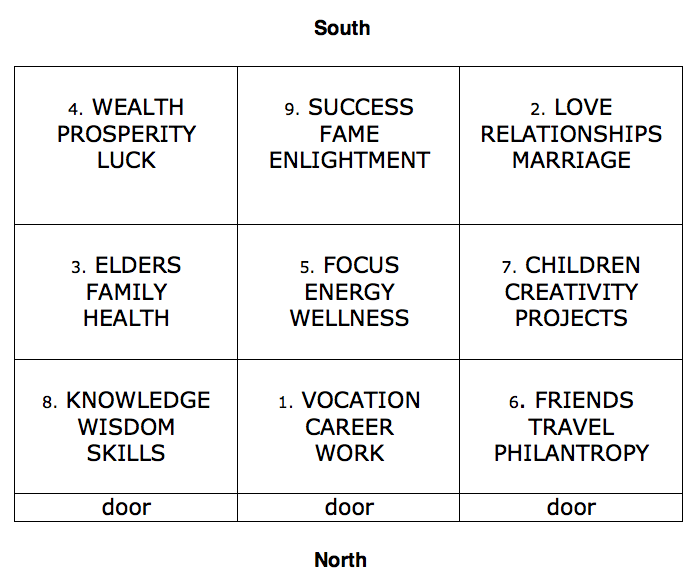
The bagua is a feng shui map that relates areas of a space to aspects of life. My guide to the different bagua approaches distinguishes three ways of working (Cisek, 2007).
Compass bagua: the wealth area is associated with the south east. Entrance based bagua: it is the far left area when looking into the space from its entrance. Personally chosen symbolic approach: select a suitable place to represent prosperity and your intentions.
These are different ways of organising the space, not three measurements that must identify the same corner. For a straightforward start, choose one approach and understand how you are using it.
Refresh the chosen area. Clean it, remove things that do not belong there and add one meaningful feature: a plant, artwork or a lamp. Do not sacrifice the room’s function to satisfy a diagram.
If the mapped area falls in an awkward place, work with a suitable part of a room or a personally chosen prosperity space. An irregular floor plan is not a financial verdict.
“In short, your wealth doesn’t depend on your wealth corner.”
Jan Cisek, Feng shui wealth corners (2008)
5. Choose a money plant you can actually help to thrive
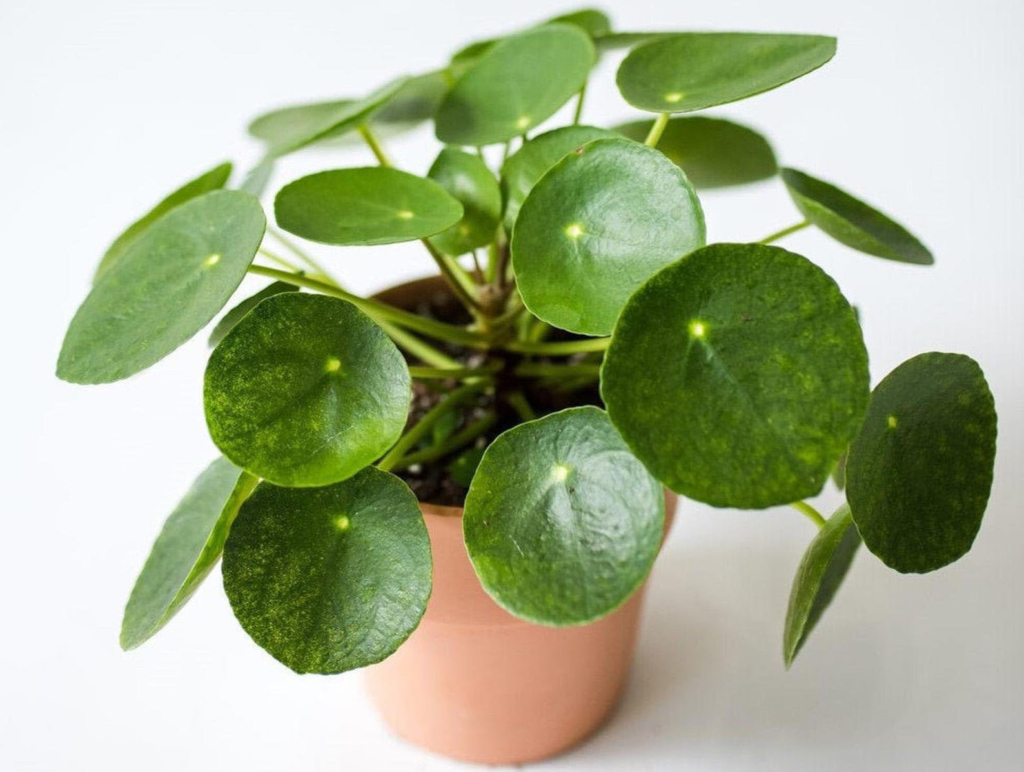
Plants offer a direct way to express growth. My feng shui money plants guide includes the jade plant, Crassula ovata, and the coin plant, Pilea peperomioides, among the plants used as prosperity symbols (Cisek, 2017).
Choose according to the conditions in your home and the care you can provide. Check the plant’s light, watering and household suitability before bringing it in. A symbolic position is not a reason to ignore what the plant needs.
Use a stable pot and protect the surface underneath. Keep the arrangement proportionate to the room. One well cared for plant is enough to begin; you do not need a collection of lucky species.
Give the plant a personal meaning: steady development, patient care or a project you are nurturing. When you attend to it, ask what else needs attention in your working life.
Try today: care for a plant you already have. Its condition is feedback about its growing conditions, not a prediction about your bank balance.
6. Bring useful light into overlooked spaces
Lighting is one of the simple adjustments discussed on my feng shui tips page (Cisek, n.d.-d). Before installing anything new, consider how you use each part of the room.
Does your reading chair have a usable lamp? Is your desk shadowed? Is a corner abandoned because nothing about it invites you to sit there? Move an existing lamp and test the difference at the time of day you normally use the space.
For a prosperity area, light can serve as a symbolic expression of attention. Practically, it can make the space more useful and its contents easier to see. Aim for comfortable illumination, not maximum brightness or glare.
Try today: turn one neglected corner into a place for reading, planning or reflection. Keep cables tidy and away from walking routes. Choose a lamp rather than a ritual that requires an unattended flame.
7. Use colours and materials to express the qualities you want
In the five elements framework, wood or tree symbolism includes growth and upward movement, with green among its associations. My article on the wood element relates this symbolism to plants, fresh flowers and uplifting imagery (Cisek, 2019b).
Use those associations selectively. A green cushion, a wooden tray or a picture of growing trees may be sufficient. You do not need to redecorate an entire room or impose a colour you dislike.
Ask what prosperity looks and feels like to you. It might suggest richness and warmth, or spaciousness and simplicity. Work with your existing furnishings and the room’s purpose.
Gold, purple or other colours may carry personal associations with wealth, but there is no need to treat any shade as a compulsory money magnet. A colour should support the environment you want to live in.
Try today: select one existing object that expresses growth, stability or enjoyment. Place it deliberately, then leave enough space around it to appreciate it.
8. Work with the water element without creating extra problems
My water element guide connects water symbolism with opportunity and career prospects. It also discusses using water pictures when an actual feature is unsuitable (Cisek, 2019a).
A photograph of a river, lake or coastline can be a practical starting point. Choose an image whose mood suits the room. Consider what it means to you: movement, connection, openness or replenishment.
Before buying a fountain, think beyond its appearance. Where will it stand? Can you maintain it? Will the sound remain pleasant while you work? Could splashes, cables or access become a problem? Follow the product’s installation and maintenance instructions.
Do not acquire fish simply to fulfil a prosperity formula. An aquarium is a commitment to living animals, not just another ornament. Artwork is an alternative when that commitment is inappropriate.
Try today: use a water image you already own and pair it with a practical question: “Which opportunity will I follow up this week?”
9. Choose prosperity symbols that mean something to you
My wealth corner guidance includes plants, crystals, water imagery and other personally meaningful objects as possible prosperity symbols (Cisek, 2008). The important question is not how many you can accumulate, but what a chosen object represents in your life.
A small bowl could stand for receiving and appreciating resources. A piece of artwork could express creativity. A photograph might represent the kind of working life you want to develop. A traditional object is appropriate when you understand and value its meaning, rather than feel obliged to display it.
Keep the arrangement simple. Select one focal object and write a sentence about its purpose. For example: “This represents the time and freedom I am working towards.” Place the sentence discreetly nearby.
Avoid turning the shelf into a growing collection of remedies. Adding more things is not necessarily the next useful step.
Try today: choose one symbol and connect it with one behaviour. Let a bowl beside your desk remind you to complete your weekly administration, not merely wish for more income.
10. Arrange your desk around the work that creates value
Prosperity feng shui should include the place where you work. My business feng shui approach considers workstations, circulation and the relationship between the business and its surroundings (Cisek, n.d.-a).
Try a desk position that gives you a comfortable view of the room and its entrance, where the layout allows. Avoid putting your chair in a busy route. A supportive position should also provide enough room to move and use your equipment properly.
Keep the main working area available for the task in progress. Store reference material within convenient reach and put unrelated projects elsewhere. A prosperity object belongs where it does not interfere with the work.
For a shared dining table, create a portable work kit that can be put away afterwards. Your home does not need a dedicated office to support purposeful work.
Try today: sit at your desk and identify the next task you will complete. Adjust the space for that task, then begin. Rearranging furniture should not become an alternative to doing the work.
For readers who include energy harmonisation in their feng shui practice, Helios3 is an optional addition to the working environment. My feng shui shop describes it as a Schumann resonance generator for homes and offices, with a 5V USB connection. It can be incorporated into your existing workspace without adding another decorative object to the wealth corner. This makes it worth exploring when your intention is to consider the whole environment where you plan, create and work. View Helios3 and order online.
11. Keep prosperity books in your home and by your bed
One of my top practical tips is to keep a small selection of books on prosperity and wealth creation in your home, including one by your bed. Give learning a visible place in the environment you are creating.
My Top 100+ Books on Prosperity and Wealth Creation page offers a starting point (Speed Reader, 2025). You do not need to buy or read the whole list. Choose one book that addresses your current question.
Possible starting points from the list include Creating True Prosperity by Shakti Gawain, Your Money or Your Life by Joe Dominguez and Vicki Robin, and 50 Prosperity Classics by Tom Butler-Bowdon. The list includes both practical and spiritual perspectives; they should not all be treated as the same kind of guidance.
Keep the arrangement modest: one current book, a bookmark and perhaps a small notebook. Read a few pages and write down one idea you can use. For example: “Tomorrow I will identify one recurring expense to review” or “I will make time to clarify what enough means to me.”
Then apply the idea at an appropriate time. A book on the bedside table is an invitation to read, not evidence that its contents are being absorbed while you sleep. If financial reading keeps your mind busy at bedtime, move it to a daytime reading chair instead.
Try today: choose one prosperity book, give it a visible home and turn one useful idea into an action. Borrowing a copy is entirely consistent with this practice.
12. Keep your bedroom a place for rest, not financial administration
The bedside book should complement the bedroom, not turn it into a second office. Set a boundary between a little reflective reading and working through invoices, messages or business problems in bed.
Review what you see from your pillow. Remove items that belong to unfinished work. Give clothes and belongings a place to go, and keep the route to the bed easy to use. Check whether the room feels comfortable for its main purpose.
Where possible, choose a bed arrangement that feels supported and allows practical access. Work with the actual room rather than sacrificing comfort to a rigid placement rule. In a studio flat, a screen, closed storage or a simple end of work routine can mark the transition.
Try today: clear your bedside surface, leave one suitable book and put work materials away. Include rest in your definition of prosperity. A home that only reminds you to produce more has not yet made room for the life those efforts are meant to support.
For a discreet addition to your bedroom feng shui, PIMAT is another option available from my shop. Described there as an energy regenerator, it is a small patterned cotton cloth placed on the mattress beneath the sheet, so it does not add to bedside clutter. In this broader approach to prosperity, its relevance is the attention you give to your own wellbeing, not just your work or possessions. Readers interested in energy based practices can explore it alongside the practical bedroom adjustments above. View PiMat and order online.
Helios3 and PIMAT are optional products within an energy based approach. Their proposed effects are not independently established by the shop information, and neither product should be treated as a guarantee of financial results or a substitute for medical care.
13. Give your wallet, paperwork and digital space a reset
Extend the same care to the places where you handle money and information. My prosperity guidance includes reviewing the contents of your wallet as a simple ritual (Cisek, 2008).
Remove obsolete items, put important receipts where they belong and organise what you use. Keep necessary records rather than throwing documents away indiscriminately. There is no need to replace a serviceable wallet or carry money you cannot comfortably spare.
Apply the idea to your digital environment. Create clear folders for current projects and administration. Separate material requiring action from reference material. Review unnecessary alerts and shortcuts that interrupt the activity you intended to do.
A meaningful image on your computer or phone can serve as a personal reminder, but it should lead back to something concrete. Use a photograph representing your goal alongside a visible next step.
Try today: organise one small information area so that the next important document or task is easy to find.
14. Repair everyday problems before buying more remedies
Walk through your home and list the things you repeatedly work around: a leaking tap, a broken drawer, an unreliable lamp, a door that catches or storage that never quite works.
You can read these symbolically as interrupted flow, but there is no need to turn the metaphor into a prediction. Deal with the actual problem. Arrange suitable repairs and leave electrical, plumbing or structural work to appropriately qualified people where needed.
Include the kitchen. Make the preparation area usable, organise the food you have and keep necessary equipment accessible. Let nourishment and practical care be part of your prosperity practice, not just decorative displays.
Check recurring household arrangements too. Is there an unused subscription you have been meaning to review? Is something awaiting return? Are you buying duplicates because the original is buried in a cupboard?
Try today: resolve one small source of waste or inconvenience. A repaired drawer or completed return may be a more appropriate prosperity adjustment than another purchase for the wealth area.
15. Make prosperity a shared and continuing practice
Bring the idea beyond possessions. Decide how your home can support relationships, learning, enjoyment and contribution alongside financial aims. My approach to feng shui for homes starts from individual needs and the creation of supportive living spaces (Cisek, n.d.-b).
Make room for a conversation, a shared meal or a creative activity. Display a photograph that reminds you of valued relationships. Pass on an unused item when doing so is appropriate. Generosity can mean time or attention; it need not involve spending money.
Review your chosen prosperity space regularly. Does it still represent what matters? Is the plant being cared for? Have the books become an unread pile? Has the intention changed?
Keep what supports your life and adjust what does not. You do not need to start again because one object moved or a symbolic arrangement became inconvenient.
Try today: choose one action that expresses prosperity as something lived and shared, rather than merely displayed.

Your seven day feng shui prosperity plan
Day one: write your prosperity intention and improve the entrance. Day two: clear one useful surface and complete the sorting. Day three: choose your prosperity area and add one meaningful object.
Day four: care for a plant or improve a neglected corner with an existing lamp. Day five: organise your workspace and complete one important task there. Day six: place a selected prosperity book beside your bed or reading chair and apply one idea.
Day seven: review a practical result and decide what to maintain. Perhaps the desk is usable, an enquiry has been answered, a repair has been arranged or your next step is clearer.
Record changes without promising yourself a financial result by a particular date. If an opportunity arrives, welcome it, but do not assume that its arrival proves which object or ritual caused it. Judge the practice partly by whether your home is becoming more supportive and your actions more consistent.
Start with what you have. Make the space useful. Give your intentions somewhere to live, and then act on them.
Questions and answers about feng shui for prosperity
What is the best feng shui tip for prosperity?
Start with the adjustment that removes the most obvious obstacle to a useful activity. For one person, that is clearing the desk. For another, it is organising paperwork or creating a place to read. Add a meaningful prosperity symbol afterwards, rather than expecting the symbol to do the practical work.
Where is the feng shui wealth corner?
In the compass bagua, it is associated with the south east. In the entrance based bagua, it is the far left area viewed from the entrance. My symbolic approach also allows you to choose a suitable prosperity space. These distinctions are explained in my bagua guide (Cisek, 2007).
What should I put in my wealth area?
Choose something that fits the space and expresses your intention: a suitable plant, a lamp, artwork or a meaningful object. Keep the area functional. A carefully chosen item is enough; there is no requirement to combine plants, crystals, water and ornaments in one crowded display.
Can feng shui make me rich?
This guide does not establish that a placement or ritual creates financial wealth. Use feng shui to organise your surroundings, express your priorities and support practical action. It does not replace paid work, skills, sound decisions or appropriate professional advice. Neither does financial difficulty prove that you have used feng shui incorrectly.
Is it good feng shui to keep prosperity books by the bed?
It can be a useful personal arrangement when it encourages reading and suits your bedroom. Keep one current book rather than a large stack. Read it and use its ideas. If the topic makes bedtime feel like work, keep the book elsewhere and protect the bedroom’s purpose.
What if my money plant is not thriving?
Review its growing conditions and care. Move it to a more suitable position, seek plant care guidance or choose a different form of symbolism. Do not interpret a struggling plant as a prediction of financial loss. The practical priority is the plant’s actual needs.
Can I use prosperity feng shui in a rented room?
Yes. Work with a shelf, bedside table, desk or reading corner. Keep changes reversible and respect shared space. A tidy work surface, a selected book and a meaningful image can express your intentions without repainting, installing equipment or rearranging the entire property.
What if my bathroom is in the wealth area?
Keep it clean, usable and maintained. Address leaks as maintenance issues, not evidence that wealth is being drained by the bagua. You can choose another suitable place for prosperity symbolism. My wealth corner article rejects the idea that an awkward or missing area determines your finances (Cisek, 2008).
Do I need to spend money or wait for an auspicious date?
Neither is necessary for the practical changes described here. Begin with cleaning, organising, moving an existing object or reading a borrowed book. Choose a time when you can complete the task. Do not postpone useful action because the arrangement, budget or date is not perfect.
How can I get advice for my particular home or workplace?
A personalised review can consider the layout, your preferences and the practical purpose of each space. For advice from Jan Cisek, contact Feng Shui London about a consultation.
References and related reading
The sources below are the Feng Shui London articles, shop information and prosperity booklist used in this guide. They document the author’s feng shui approach and reading suggestions; they are not presented as independent scientific confirmation of financial effects.
Cisek, J. (2007, March 12). Feng shui bagua. How to use bagua? Difference between classic compass bagua school and western three-door gate of chi bagua map. Which feng shui bagua school is better? Feng Shui London.
Cisek, J. (2008, February 6). Feng shui wealth corners in homes, workplaces according to bagua matrix to boost prosperity and wealth creation. Feng Shui London.
Cisek, J. (2017, March 8). Feng shui money plants. Feng shui plants to attract wealth into your homes and workplaces. Feng Shui London.
Cisek, J. (2019a, June 3). Water element in feng shui = opportunity, prosperity, wealth and career prospects and more… Feng Shui London.
Cisek, J. (2019b, December 3). Wood or tree element: The theory of five elements. Feng Shui London.
Cisek, J. (2023, October 8). Feng shui and clutter clearing: The art of less: Embracing minimalism for a feng shui-inspired life. Feng Shui London.
Cisek, J. (n.d.-a). Feng shui for business. Feng Shui London.
Cisek, J. (n.d.-b). Feng shui for homes. Feng Shui London.
Cisek, J. (n.d.-c). Feng shui shop. Feng Shui London.
Cisek, J. (n.d.-d). Feng shui tips. Feng Shui London.
Speed Reader. (2025, July 10). Top 100+ books on prosperity and wealth creation. spdrdng.