
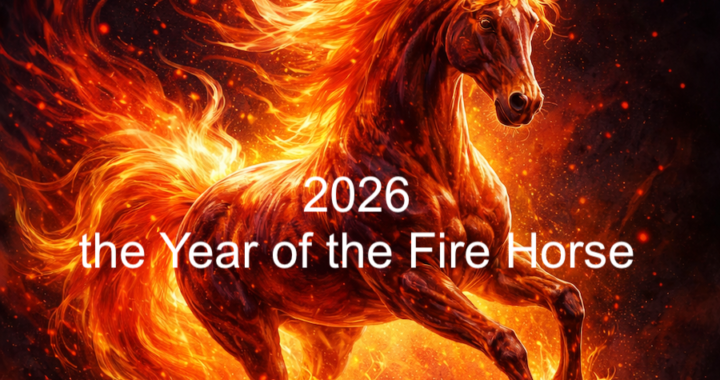
Navigating the Year of the Fire Horse 2026: feng shui insights and practical tips
Introduction to the Fire Horse Year
The lunar New Year beginning on 17 February 2026 marks the start of the Year of the (Yang) Fire Horse. According to traditional Chinese cosmology, the energy of the year is determined by the interaction of one of the twelve zodiac animals with one of the five elements. The horse is an energetic, sociable and independent sign, while fire element is associated with passion, transformation and dynamic movement. When these forces combine, the result is a period marked by ambition, creativity, and the urge to break new ground. Western astrology points to 2026 as a year shaped by initiation, acceleration, and redefinition. The last occurrence of a fire horse year was in 1966. The next will not come again until 2086, making this a rare and potent confluence that invites careful reflection and conscious engagement. 2026 is a year for confident action guided by clarity and intention, rather than hesitation or passive waiting.
Understanding the Fire Horse energy
The fire horse stands out in Chinese astrology because it magnifies qualities that are already strong in the horse. Individuals born under the fire horse sign are often charismatic, driven and fearless. They relish freedom, despise constraints and prefer direct action to lengthy debate. The fire element adds an extra layer of enthusiasm and creative flair. This is reflected in a willingness to take risks, pioneer ideas, and inspire others through personal conviction. It can also manifest as impatience, impulsive decisions and a tendency to burn brightly and then move on. To harness the benefits of this energy without becoming overwhelmed, it is wise to balance passion with patience and independence with collaboration. The underlying water element (from the bagua 9 star astrology) associated with this combination indicates a need for emotional depth and adaptability; when the fire of ambition meets the river of wisdom, the potential for sustainable achievement increases.
Listen to this blog
Table of Contents
- Introduction to the Fire Horse Year
- Understanding the Fire Horse energy
- The fire element in feng shui
- A historical perspective: what happened in 1966?
- Bagua model and flying star patterns for 2026
- Practical feng shui tips for the fire horse year
- Astrology and feng shui: time versus space
- Western astrology for 2026
- Horse symbolism in modern branding
- Questions and answers
- Conclusion and invitation
The fire element in feng shui
Within the five-element system of feng shui, fire corresponds with summer, the south, the heart, and the colour red. It brings warmth, light and visibility. In interior design, this is expressed through light, lamps, triangular or pointed shapes, and bright hues such as red, crimson, and orange. Fire fuels enthusiasm, stimulates social interaction and supports fame and recognition. Too much fire, however, can lead to restlessness, overheating or burnout, while too little results in apathy and lack of direction. Balance is achieved by integrating complementary elements: earth provides stability and grounding, water cools and moderates, wood feeds fire in a controlled manner, and metal drains excesses. In the fire horse year, you may wish to introduce lively tones and vibrant art into your living space while also ensuring a sense of calm through flowing water features, soft textures, and natural materials. Read more on the fire element in feng shui
A historical perspective: what happened in 1966?
Historical and symbolic foundations of the Chinese zodiac cycle
The Chinese zodiac’s origins go back thousands of years, possibly to the Han Dynasty or even earlier. The system combines a 12-year cycle, with each year represented by an animal, with the five elements – wood, fire, earth, metal, and water – to create a 60-year cycle.
The origins are partly rooted in observation of the natural world, where ancient Chinese astrologers and scholars noticed recurring patterns in human life, nature, and cosmic events. In Chinese philosophy, these animals and elements served as metaphors for different types of energy – what we might call archetypes today – each embodying specific characteristics or tendencies.
For example, the horse is often associated with energy, freedom, and strength, while fire is linked to dynamism, passion, and transformation. Put together, a year of the fire horse suggests a time of great activity, drive, and sometimes unpredictability.
The 12-year cycle, with its animal signs, is thought to have started by observing Jupiter’s orbit, which is approximately 12 years. Pairing each year with an animal and element created a rich symbolic system that helped people make sense of time and human behaviour.
While there’s no single historical event marking the exact beginning, the system evolved over time, blending astrology, mythology, and practical observation. So it’s both a metaphor and a reflection of ancient knowledge about the rhythms of life and nature. However, many scholars, historians, and astrologers have reviewed historical records and sought to compare patterns. For example, people often look at past fire horse years – such as 1966 or even 1906 – and analyse major global or societal events to see whether they align with the expected energy themes. 1966, for instance, was a year of major upheaval: the Cultural Revolution in China began, and significant cultural and political shifts occurred worldwide. Similarly, people analyse 1906 and note events such as the San Francisco earthquake, which aligns with the intense energy a fire horse year is said to bring.
Of course, there’s debate on whether this is truly causative or just coincidental. However, many astrologers and practitioners of Chinese metaphysics argue that these patterns reflect a form of resonance. They believe that examining past cycles can help us understand the underlying dynamics of the present and future. Ultimately, it’s part historical analysis and part interpretation, blending real events with symbolic meaning.
Specific events of 1966
The previous fire horse year, 1966, offers insight into the potential flavour of 2026. It was a period of dramatic change and cultural upheaval. In China, the Cultural Revolution began, a massive socio‑political movement that reshaped the nation’s intellectual and artistic landscape. Across the world, new voices and ideas were gaining prominence: Indira Gandhi became prime minister of India, demonstrating the rise of female leadership on a global scale, and France withdrew from NATO’s integrated command, signalling shifts in international alliances. The Beatles found themselves at the centre of controversy when John Lennon remarked that the band was “more popular than Jesus”, a sign of the growing power of youth culture. Television viewers saw the first episodes of Star Trek, inviting imaginations to look beyond Earth, while the Soviet Union’s Luna 9 achieved the first soft landing on the Moon. In sport, England won the football World Cup, giving the nation a lasting source of pride. Meanwhile, in Japan, a deeply ingrained superstition about women born in fire horse years led many couples to postpone pregnancies, resulting in a significant decline in births. These diverse events illustrate how a fire horse year can coincide with revolutionary ideas, technological breakthroughs, social activism and challenges to tradition. Rather than foretelling doom, they encourage us to be conscious of how collective narratives influence individual choices.
Among the most widely recognised and influential technological advances associated with 1966 were innovations that quietly reshaped modern life at a foundational level. Charles K. Kao and George Hockham proposed optical fibre communication technology, a breakthrough that ultimately enabled global high-speed data transmission and the internet infrastructure that underpins today’s digital society. In materials science, Stephanie Kwolek developed Kevlar, a synthetic fibre five times stronger than steel by weight, now essential in bulletproof vests, aerospace engineering and industrial safety. In parallel, Ralph H. Baer created the first working prototype of a home video game system, laying the groundwork for the global interactive entertainment industry, while Hewlett-Packard’s HP 2116A helped accelerate the adoption of integrated-circuit computing in laboratories and industry. Around the same time, James Goodfellow’s ATM patent introduced the plastic card and PIN system, transforming banking accessibility, even though widespread deployment followed later. Collectively, these innovations addressed fundamental human needs for communication, protection, interaction and access, which explains their lasting impact, while also reminding us that historical narratives of “importance” often reflect dominant cultural perspectives rather than the full global landscape of innovation.
Seen through this historical lens, the major innovations of 1966 offer a useful template for understanding AI in 2026. Fibre optics transformed how information travels, Kevlar redefined protection, early computing systems expanded human capability, and the ATM reshaped access to resources. In 2026, artificial intelligence appears to be following a similar trajectory, moving from novelty into infrastructure. AI is likely to become increasingly invisible yet essential, embedded in communication systems, healthcare, finance, education and creative work, much as fibre optics quietly powers the internet today. This points to greater efficiency, personalisation, and support for complex decision-making. At the same time, as with earlier breakthroughs, challenges will surface around control, resilience, dependency and ethical use, particularly as AI systems become harder to distinguish from the processes they support. The lesson from 1966 is that the most enduring technologies are those that serve fundamental human needs, and the defining question for AI in 2026 will not be how powerful it becomes, but how consciously it is integrated into human life.
The Fire Horse year of 1966 coincided with the birth of many prominent figures across film, music, sport, media and public life, including Adam Sandler (actor and comedian), Mike Tyson (former heavyweight boxer), Janet Jackson (singer and performer), Helena Bonham Carter (actress), Halle Berry (actress), Salma Hayek (actress and producer), Jeffrey Dean Morgan (actor), Patrick Dempsey (actor and racing driver), Rick Astley (singer‑songwriter), Cindy Crawford (model and entrepreneur), David Cameron (politician), Chris Evans (radio and television presenter), Alan Davies (comedian and actor), Shirley Manson (singer and musician), Luke Perry (actor), and Stefan Edberg (professional tennis player).
1966 Art
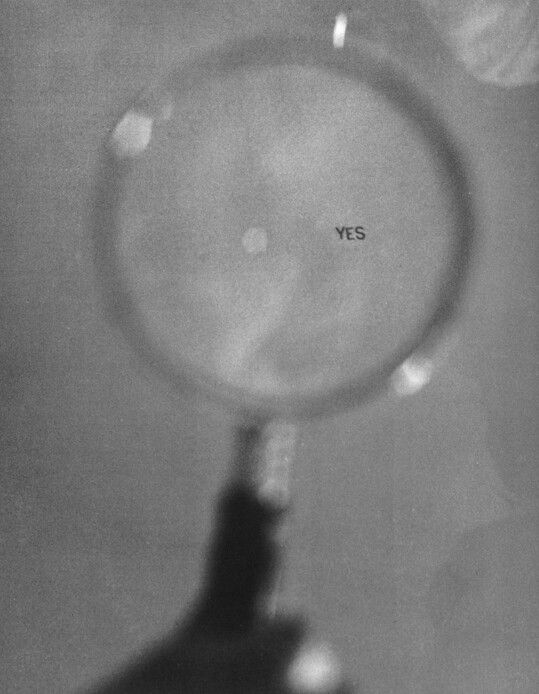
Yoko Ono, Ceiling Painting / Yes Painting, 1966, interactive conceptual work first shown at Indica Gallery, London, inviting viewers up a ladder to read the tiny word “YES.”
Yoko Ono’s Ceiling Painting / Yes Painting (1966) is a striking analogue for 2026, because it anticipates a world in which hope is neither given nor obvious but must be actively sought and co‑created. The work obliges the viewer to climb a ladder and peer through a magnifying glass to discover a tiny YES, turning affirmation into an embodied, effortful act rather than a slogan. In an era marked by AI‑driven misinformation, climate anxiety and fractured media narratives, the image of a person literally ascending through uncertainty in order to locate a small but unequivocal positive signal feels uncannily accurate. It suggests that 2026 will not be defined by spectacle or passive consumption so much as by the micro‑acts of attention, participation and ethical choice through which individuals construct meaning. Seen this way, Ono’s piece captures a mood of fragile optimism: the sense that, amidst crisis and noise, it is still possible to find a clear “yes”, but only if we are willing to do the work of climbing towards it.
Andy Warhol, Self-Portrait, 1966, silkscreen on paper and canvas, multiple versions and editions; a key Pop Art image using Warhol’s own face as a celebrity icon.
Andy Warhol, Banana, 1966, silkscreen image later used on the Velvet Underground & Nico album cover, now an instantly recognisable Pop icon.
Francis Bacon: a series of portraits of George Dyer, begun in 1966, including key works that shaped his late figurative style and reputation.
Edward Ruscha, Every Building on the Sunset Strip, 1966, is a photographic panorama artist’s book documenting Los Angeles’ Sunset Strip, central to his conceptual and Pop practice.
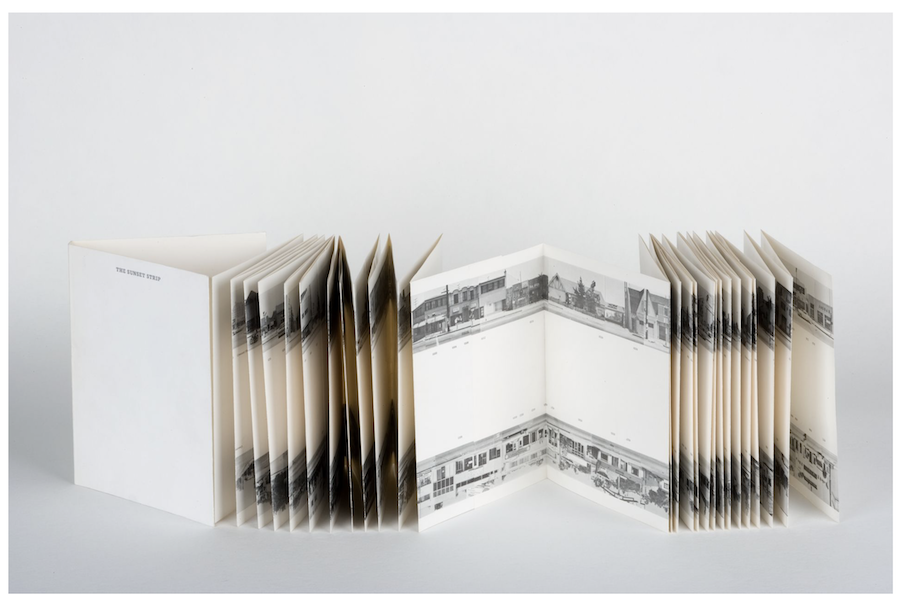
Every Building on The Sunset Strip by EDWARD RUSCHA, 1966
Top songs of 1966 (US & UK)
In 1966, some of the most prominent singles in the United States included “California Dreamin’”by The Mamas & the Papas, “96 Tears” by ? and the Mysterians, “What Becomes of the Brokenhearted” by Jimmy Ruffin, “Last Train to Clarksville” by The Monkees, and “Reach Out I’ll Be There” by Four Tops, all ranked at the top of Billboard’s Year-End Hot 100. In the United Kingdom, key hits from the 1966 year‑end Top 10 included “Distant Drums” (Jim Reeves), “Strangers In The Night” (Frank Sinatra), “Yellow Submarine / Eleanor Rigby” (The Beatles), “Reach Out I’ll Be There” (Four Tops), “These Boots Are Made For Walkin’” (Nancy Sinatra), “The Sun Ain’t Gonna Shine Anymore” (The Walker Brothers), “Green Green Grass Of Home” (Tom Jones), “Sunny Afternoon” (The Kinks), “With A Girl Like You” (The Troggs), and “Pretty Flamingo” (Manfred Mann), reflecting a year dominated by a mix of American pop, Motown, crooners and British beat groups. If these are distilled to a single, portable theme: 1966 pop is about searching for solid ground in a world of emotional, social and geographic flux. The songs repeatedly stage people in transit, hearts in pieces, identities in negotiation and “home” as something imagined, performed or remembered rather than securely possessed.
Here are some of the most famous books published in 1966, along with notable quotes that might shed some light on things to come in 2026.
“The Moon is a Harsh Mistress” by Robert A. Heinlein: One famous quote is: “There is no such thing as a free lunch.”
2026 will be the year we finally realise that “there is no such thing as a free lunch.” Every shortcut we took with the planet, with data, with other people’s time and attention will present its bill. Subsidised illusions will be harder to maintain, and systems that looked free will reveal their true costs in climate, privacy, and mental health.
“Rosencrantz and Guildenstern Are Dead” by Tom Stoppard: A well-known line is: “We cross our bridges when we come to them, and burn them behind us.”
We will cross our bridges only when we come to them, but we will also notice how quickly we burn them behind us. Careers, platforms, alliances, even identities will be shed at speed. The danger will not be change itself, but our tendency to sever ties so completely that we lose history, continuity, and trust. In 2026, the art will be to move forward without always needing to erase what came before.
“The Crying of Lot 49” by Thomas Pynchon: A notable quote is: “The truth changes according to the angle from which it is seen.”
The truth will keep changing according to the angle from which it is seen, and 2026 will intensify this. AI-generated realities, personalised feeds, and partisan narratives will fracture any remaining illusion of a single shared story. Those who thrive will be the ones who treat perspective as data rather than doctrine, learning to rotate the problem and inspect it from multiple sides without clinging to any one view as absolute.
“The Fixer” by Bernard Malamud, which won the Pulitzer Prize: One famous quote is: “We must live life waiting for good to come from bad.”
Yet even as the costs come due and the narratives multiply, we will still be living life “waiting for good to come from bad.” Crises in energy, health, and geopolitics will act as forced experiments, pushing us toward unplanned innovation and unlikely collaboration. 2026 will reward those who can endure ambiguity long enough for new possibilities to crystallise out of disruption.
In that sense, 2026 may not be a comfortable year, but it may be a clarifying one. It invites us to pay what we owe, to cross our bridges more consciously, to treat truth as something to be triangulated rather than imposed, and to look for the specific, grounded good that can grow from difficulty instead of romanticising either collapse or progress. Keywords for this 2026 “theme”: Accountability, Consequences, Perspective, Narrative fracture, Bridge-burning, Disruption, Clarification, Ambiguous hope, Forced innovation, Ethical reckoning.
The problem of retrospective interpretation
When analysing historical events through the lens of the Chinese zodiac or any symbolic system, researchers risk falling into cognitive biases that distort interpretation. Confirmation bias may lead one to notice only the events that fit the expected “energy” of a given year while ignoring contradictory evidence. Hindsight bias can make the connection between a symbol and its outcome seem inevitable once the outcome is known. There is also patternicity – the human tendency to perceive meaningful patterns in random data – which can reinforce a sense of cosmic order where none objectively exists. Such biases remind us that interpretation often reveals as much about the observer’s expectations as about the events themselves.
Bagua model and flying star patterns for 2026
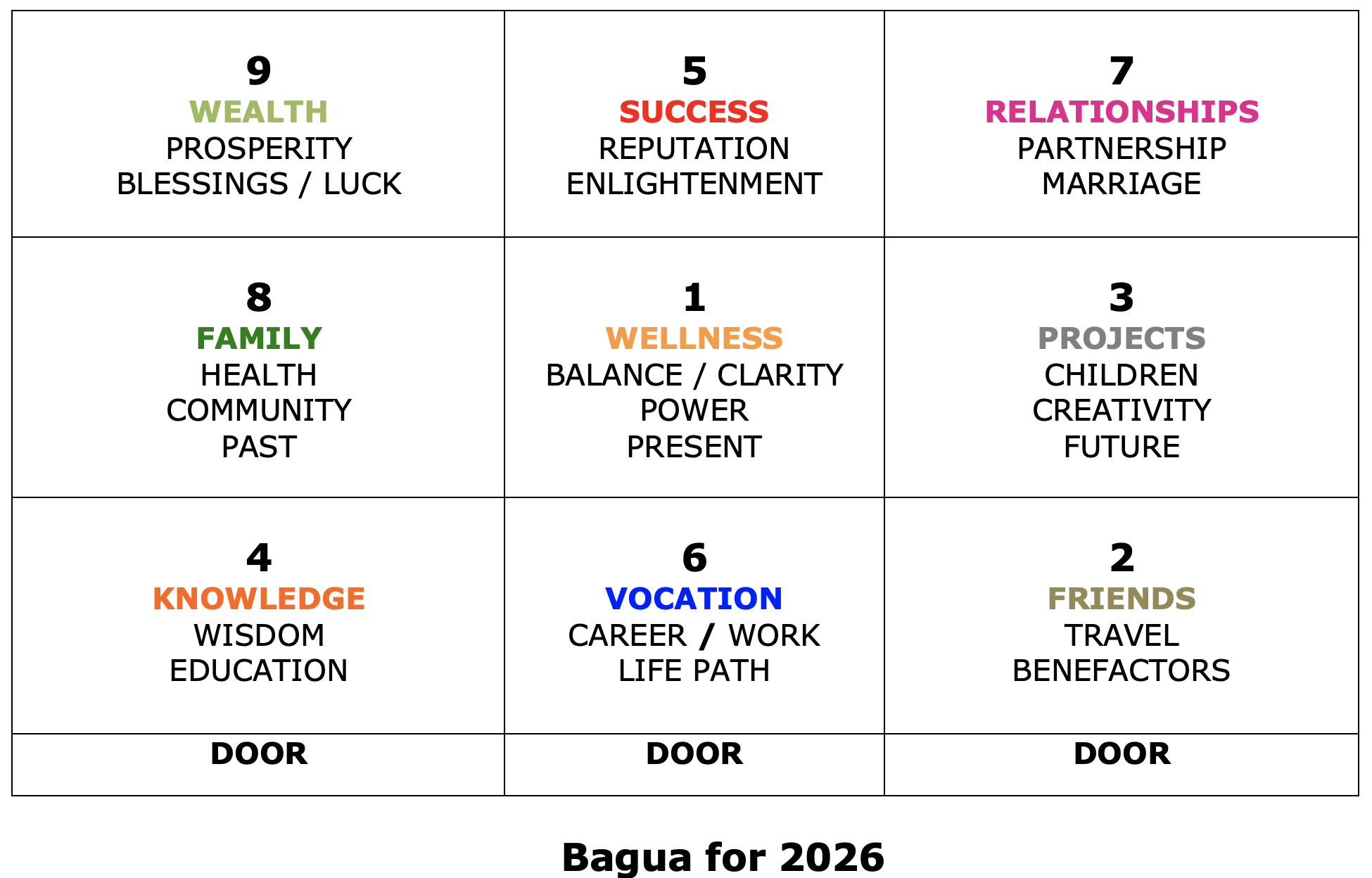
Feng shui uses the bagua model, a nine‑section grid that maps different life areas to the compass directions of a home or workplace. Each year, the flying stars change position, and understanding their movements helps to fine‑tune your environment. In 2026, the Star 1 takes its place at the centre of the bagua. Star 1 belongs to the water element and is linked with career, communication, wisdom, new opportunities, and new life paths. When activated, it supports success and helpful connections.
Below is an overview of the annual star positions for 2026 and suggestions for making the most of them. You can use compass directions or align your bagua so the front door corresponds to the appropriate sector. Always adapt remedies to suit your space, taste and needs; intention and consistency matter more than rigid placement. Feng shui = intention + ritual.
The movement of the stars reminds us that time and space are interconnected. While annual influences suggest themes, the way we arrange our environment and behave within it determines how those themes manifest.
Refer to the chart above (Bagua 2026) to determine which bagua area your number falls under in 2026. For example, if your number is 9, in 2026 your star number is in the wealth/prosperity/luck area, so primarily, 2026 will be about this aspect of your life (to boost your wealth luck, read The Luck Factor – scientific and practical ways to boost luck in any area of life – this year).
Energising the area of the bagua where your annual star resides in 2026
In 2026, the annual energy is anchored by star 1 at the centre of the bagua, bringing strong water energy to the heart of the home. This makes the way we consciously activate space particularly important, as the centre influences all other areas.
There are many simple and effective ways to energise the bagua of your home. The most accessible tools include light (lamps, etc.), crystals (especially prismatic or rainbow-making crystals), reflective or shiny objects, plants, gentle water features or aquariums, natural elements that feel alive and supportive, as well as symbolic or metaphorical images, pictures, and objects. The key is not complexity, but clarity of intention.
It is worth remembering that feng shui is always a combination of intention, your personal energy, and ritual. Intention is by far the most important element, around 60%. Your presence, attention and emotional engagement account for about 30%. The physical ritual itself is the smallest part, roughly 10%. In other words, how and why you place something matters far more than the object itself.
For example, plants such as the money tree (Crassula ovata) can thrive in any room of the home. Their effectiveness does not depend on a single “perfect” location. Practically speaking, they thrive best where there is natural light, ideally facing east, south or west, but energetically they respond most strongly to your intention rather than strict rules.
For 2026, take time to reflect on what you would genuinely like to invite into your life during the year ahead. Write it down, as this is often the first step in conscious manifestation. Then consider which area of the bagua symbolically supports that intention and how you might gently activate it in a way that feels meaningful to you. This could be through light, symbolism, living plants, sound, or a small personal ritual.
If you are unsure which area to activate or how to align your home or workplace with the energies of 2026, feng shui personalised guidance can make the process much clearer and more effective.

Painting by Stephen Frank
Practical feng shui tips for the yang fire horse year – how to ride this year’s horse energy
The following suggestions adapt classical and modern feng shui principles to the unique qualities of 2026. Choose the ones that resonate and disregard anything that causes discomfort; the purpose of feng shui is to support you, not to create anxiety (don’t buy into any false-problem-feng-shui or superstitions).
-
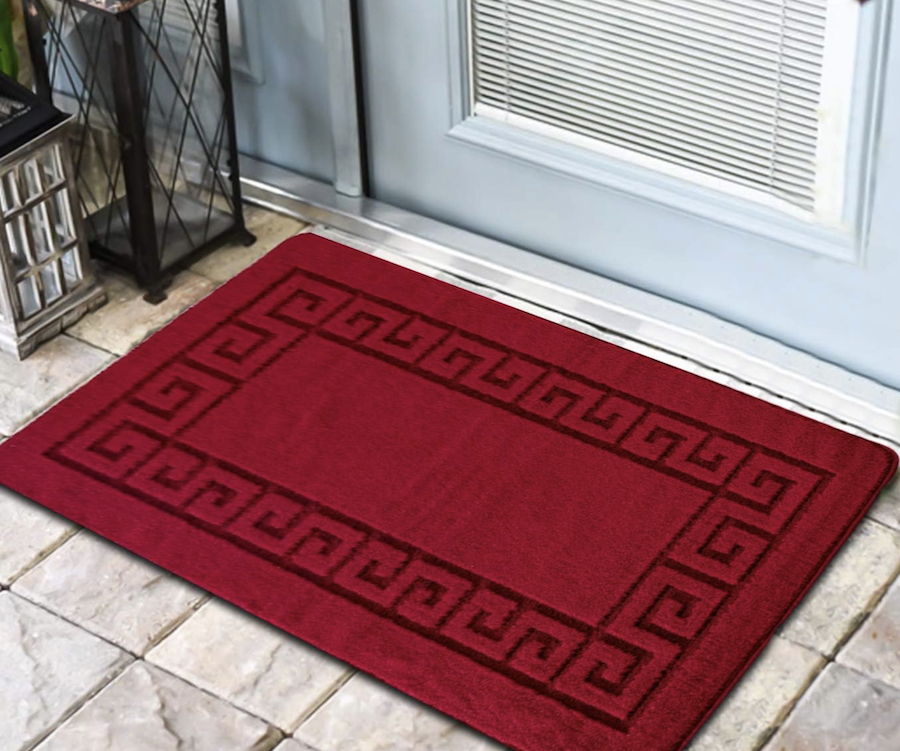
Introduce a horse symbol: Place a red or fiery‑coloured horse figurine, painting or photograph in an area you wish to energise, such as your living room or the wealth corner. The horse symbolises movement, freedom, and success; in the fire horse year, it serves as a reminder to pursue your goals with passion and grace. Traditionally, a horseshoe symbolises protection and prosperity. Also, you can change the doormat to invite new energies and opportunities into your home.

The way to hang the horseshoe is up like the letter U.
-
Align your personal star number: In the 9 Star Ki system, your birth year determines a personal star number. Add the digits of your birth year until you reach a single digit, then subtract 11 to get this number for most people. Locating your star in the bagua helps you focus your efforts. If you are unsure of the calculation, consult a specialist who can guide you. See the above bagua model for 2026
-
Celebrate the New Year in style: Wear something brand new, preferably in red, on 17 February 2026 to mark a fresh start. Chinese tradition favours red and gold for their associations with luck and vitality. You might also enjoy a celebratory meal with family or friends to welcome new energy. Or get eight oranges (or do a Feng Shui Orange Peel Blessing Ceremony) – this is a traditional ritual for every Chinese New Year. Traditionally, Chinese New Year is celebrated for five days…
-
Light up your space: Warm lighting activates the fire element. Use them to highlight areas of the home (according to the bagua model) that need attention. In the centre, introduce soft blue accents or an image of flowing water to balance the water element of star 1 with the fire element of the year.
-
Declutter, space clear, protect and energise: Clearing out old possessions creates room for new opportunities. Schedule a thorough de‑cluttering session before the New Year and maintain it throughout 2026. Consider smudging with sage or, better still, use space-clearing mists, ringing a bell or using sound to refresh the energy in your home.
Protect yourself, your home, and your workplace with Helios3USB – Schumann Resonance Generator for geopathic stress and electrosmog mitigation.
Energise yourself while you sleep with PIMAT, a pyramid power-based sleep device. -
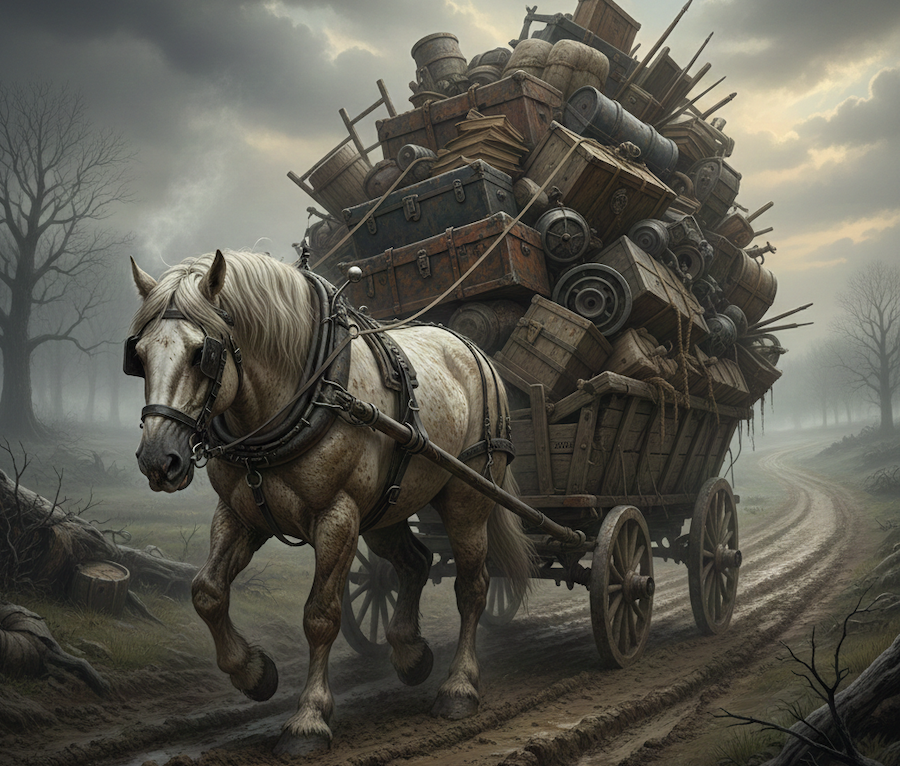
Letting go of old baggage. This Fire Horse year invites you to stop being the workhorse that drags everyone else’s expectations behind you like an overloaded cart on a muddy road. Imagine unhooking that cart, feeling the weight drop away, and realising how much further and faster you can move when you are no longer pulling old stories, resentments, and clutter from the past. You can mirror this energetically at home by clearing stagnant objects that carry memories of stress, failure, or obligation, so your environment no longer tugs at you like a heavy harness from behind. As you release physical and emotional baggage, you give your inner Fire Horse permission to run lighter, freer, and more joyfully into 2026.
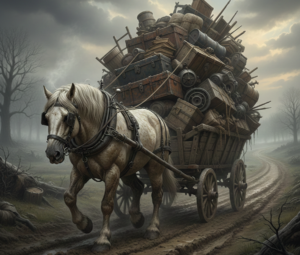
Let go of old baggage
-
Write down your aspirations: The fire horse year supports bold goals and creative visions. Set aside time to outline what you wish to achieve in different areas of life. Use clear, positive language and revisit your list regularly. Displaying your intentions in a prominent place can serve as a daily reminder. Create a bagua model collage or wish list.
-
Focusing your fire like blinders. Fire Horse energy is powerful but can scatter if you chase every shiny opportunity at once, like a spirited horse spooked by movement in its peripheral vision. Blinders do not limit the horse; they sharpen its focus, keeping its eyes on the road ahead so its strength moves in one clear, purposeful direction. In the same way, you can use feng shui to reduce visual and energetic “noise” in your space by simplifying your desk, removing distracting objects from your main work area, and setting up a dedicated spot that always points you back to your key goals for 2026. When your inner and outer environments act like gentle blinders, you stop leaking energy sideways and start channelling your Fire Horse momentum into what truly matters.
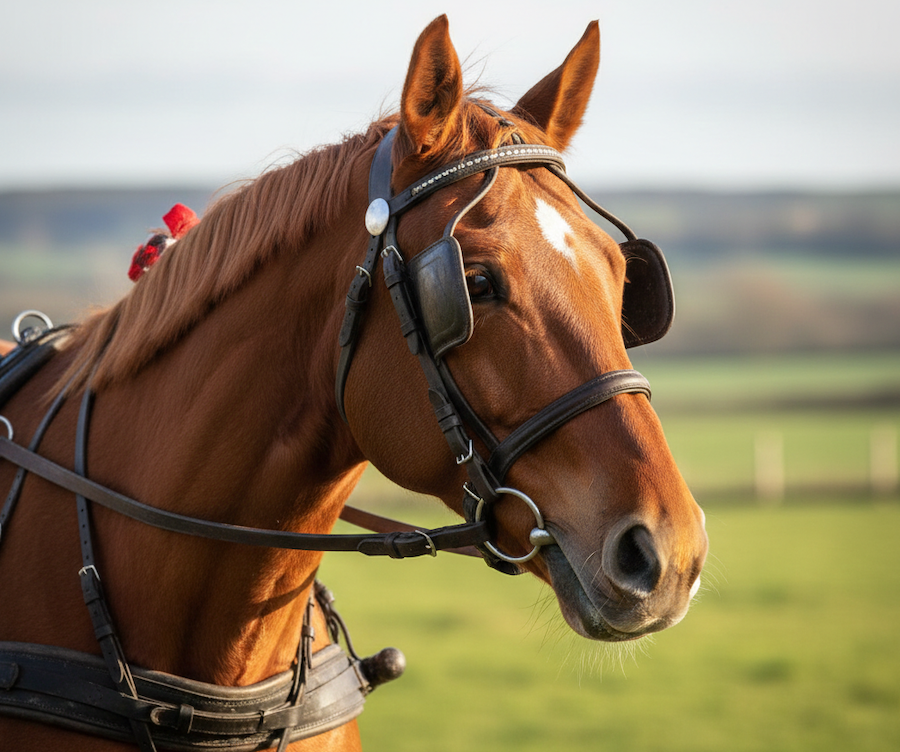
Focusing forward
-
Embrace movement and health: Horses love to move. Incorporate regular physical activity, such as walking, dancing, or yoga, into your routine. Balance intensity with restorative practices like swimming or meditation to prevent burnout.
-
Use technology mindfully: Choose a dynamic fire horse image as a screensaver or smartphone wallpaper to keep the energy alive in your digital life. Engage with online tools and AI that inspire and educate rather than deplete your energy.
-
Cultivate patience and listening: The fiery temperament can be quick to react. Practising deep listening and mindful breathing helps transform potential conflict into constructive conversation. Surround yourself with art or quotes that evoke calm and compassion.
-
Host a gathering: Community and celebration amplify positive chi. Arrange a small gathering or community event, perhaps involving charitable giving or creative collaboration. Sharing experiences multiplies good fortune.
-
Mind your finances: Fire energy can encourage risk‑taking. Plan your finances carefully, avoid impulsive investments and focus on steady growth. Consider consulting a financial adviser if you are planning major changes.
-
Consider professional guidance: If you are unsure how to apply these ideas, consult an experienced consultant. Personalised advice can integrate your unique needs with the complexities of the flying stars and your home’s orientation.
Astrology and feng shui: time versus space
Chinese astrology and feng shui are complementary disciplines. Astrology is primarily concerned with time: it studies how cycles of years, months, and days influence individual destinies and collective moods. The zodiac animals and elements describe patterns of behaviour and potential opportunities based on a person’s birth data or the characteristics of a specific year. Feng shui, on the other hand, is concerned with space: it analyses the flow of energy through buildings and landscapes. By harmonising our surroundings, we can support our health, relationships and prosperity regardless of external circumstances.
In 2026, the fire horse year brings strong yang fire energy, while the flying star chart places the water‑ruled Star 1 in the centre. This juxtaposition of fire and water serves as a reminder that balance between time‑driven impulses and spatial stability is essential. Where astrology may encourage bold action, feng shui invites measured preparation. Together, they suggest that creativity flourishes when it is anchored in a supportive environment.
Western astrology for 2026
The year 2026 is characterised as a significant forward launch and a complete rebirth for humanity, moving out of the current rehearsal phase into a period of high-frequency acceleration that begins with a mountain-top experience of clarity in early January. Specifically, around January 3rd through the 5th, earth frequencies are expected to rise significantly as pyramid power activates, signalling a time when individuals must stop trying to save others and instead take full authority over their own lives. This momentum builds toward January 11th, which brings an intense galactic burst of light where the Sun, Mars, and Venus align in Capricorn to heal the heavy cycles that began in 2020 by elevating them to a higher octave of love and expanded consciousness. Shortly after, on January 26th and 27th, Neptune enters the zero degree of Aries, a critical point of pure potentiality that initiates a new fourteen-year cycle. The energy intensifies further in February, marked by a Solar Eclipse on the 17th that activates the higher mind and galactic energies, followed by a historically rare event on February 20th where Saturn and Neptune join at the very start of Aries for the first time since 4361 BC, representing a total reset for the collective. By April 26th, Uranus enters Gemini, meaning all outer planets will have shifted into new signs, fully releasing these new energies and setting the stage for a unique planetary alignment peaking on July 18th involving Pluto, Uranus, Saturn, and Neptune, which represents the blossoming of seeds planted centuries ago and an influx of high consciousness energy.
To navigate this profound shift, it is advised to use the current period to rest and prepare the nervous system (grounding/earthing, nature, meditation, optimum sleep, etc), allow old structures to break without trying to force them back together, create a personal plan for self-soothing during intense moments, and actively invite joy and play while trusting that this is a shared evolution toward cooperation and better times.
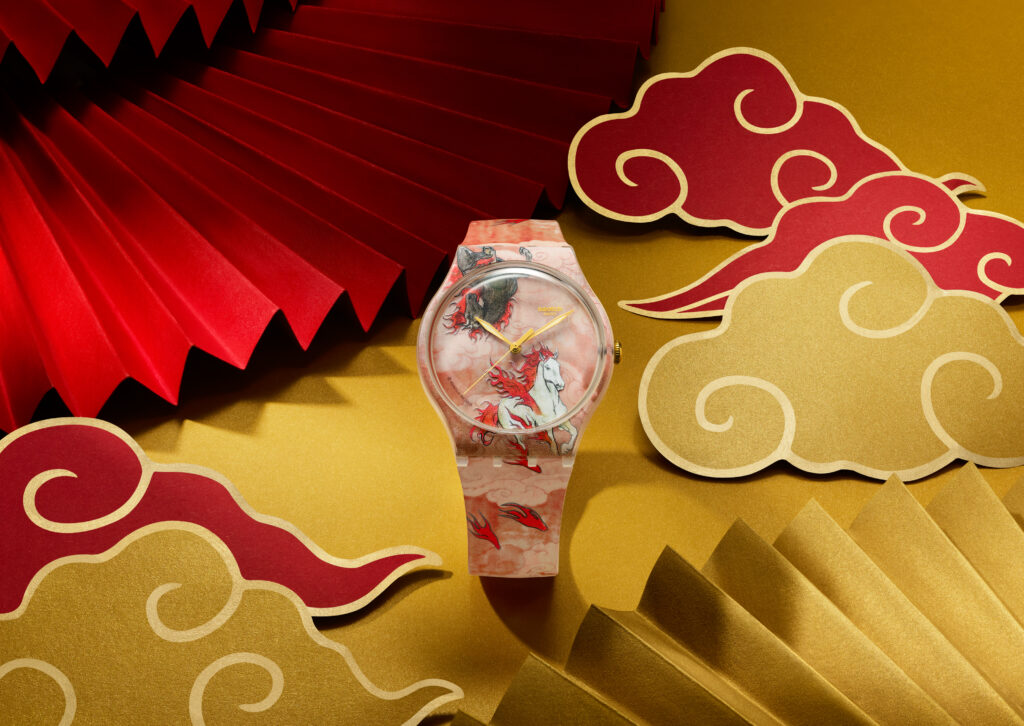
The Swatch Year of the Horse “Riding the Clouds”
Horse symbolism in modern branding and Tarot
2026 is widely recognised as a Year of the Horse in the Chinese zodiac, a time associated with dynamism, movement, and boldness, and this energy is echoed in how the horse appears across global branding. The image of the horse features prominently in many well‑known brands, where it consistently stands for strength, speed, endurance and nobility. Burberry’s equestrian knight on horseback combines nobility with modernity and historically signalled protection and prestige. See how Burberry celebrates the Year of the Horse 2026. Ferrari’s famous prancing black horse on a yellow background was adopted after founder Enzo Ferrari met Countess Paolina Baracca, whose son had painted a black horse on his fighter plane for luck; the emblem conveys speed, courage and Italian heritage. Porsche derives its horse from the coat of arms of Stuttgart, the city where the company was founded; it symbolises power, reliability and pride in local roots. See Porsche – Lunar New Year Ford’s Mustang logo depicts a free‑galloping stallion and reflects the spirit of freedom and adventure associated with the American West. Lloyds Bank’s black horse functions as a long‑standing symbol of financial strength, continuity and dependability. Hermès, the French fashion house, uses a horse‑drawn carriage in its logo to honour its origins as a harness and saddle maker and to evoke craftsmanship and elegance. Ralph Lauren’s polo player on horseback references the exclusive heritage of polo and projects an aspirational, refined lifestyle. In the world of horology, Longines has also embraced this symbolism with its limited‑edition Longines Master Collection Year of the Horse Edition watch, whose rotor is engraved with a galloping horse motif, turning timekeeping into a moving tribute to the Year of the Horse’s energy. Other notable horse‑themed watches for the Year of the Horse include the Swatch Year of the Horse “Riding the Clouds”, the Bulova Super Seville Year of the Horse and the TAG Heuer Carrera Chronograph Year of the Fire Horse, as well as the Vacheron Constantin Métiers d’Art Year of the Horse. These examples illustrate how the horse serves as a universal symbol of strength, speed, endurance and nobility across domains ranging from luxury fashion to finance and automotive engineering. Incorporating such imagery into your environment, whether through art, fashion, or even a simple toy, can serve as a subtle feng shui reminder or prompt to cultivate and embody the virtues you wish to cultivate during the Year of the Horse, such as boldness, resilience, and purposeful movement.
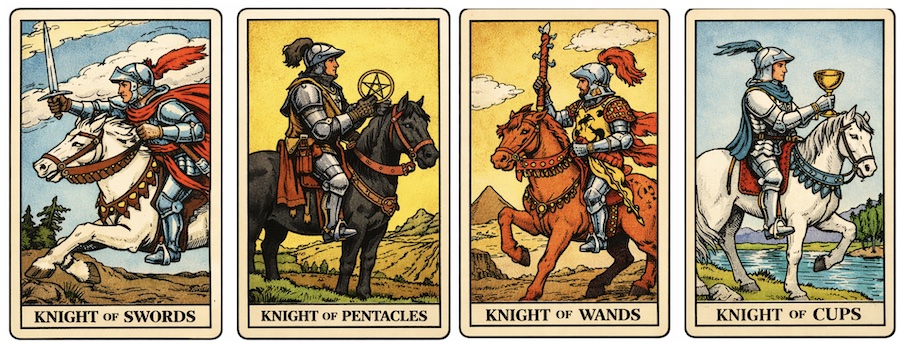
Tarot with horses with four energies: air, earth, fire, and water.
Knights, horses, and the French connection in Tarot
In the Tarot, the knight cards, known as “chevaliers” in French, embody the spirit of action and adventure. The word “chevalier” comes directly from “cheval,” meaning horse, reflecting the knight’s close relationship with their steed. In Tarot, four key cards feature the horse prominently: the Knight of Swords (action and intellect), the Knight of Pentacles (wealth, diligence and practicality), the Knight of Wands (adventure and inspiration), and the Knight of Cups (emotion and creativity). Each horse represents different types of energy: air, earth, fire and water and symbolises movement and direction in life’s journey. Interestingly, the French language also reflects another cultural aspect: “viande de cheval” refers to horse meat, a delicacy that has been part of French cuisine for centuries.
Artificial Intelligence in 2026 – echoes of 1966 and the Fire Horse momentum
Looking back to 1966, another Fire Horse year, we see a period marked by bold experimentation, rapid technological ambition, and profound social disruption alongside genuine breakthroughs. Space exploration accelerated, computing moved from theory to application, and society struggled with the consequences of new tools arriving faster than cultural norms could adapt. In 2026, artificial intelligence sits in a strikingly similar position. On the positive side, AI is likely to become far more integrated into everyday life, supporting creativity, research, healthcare, education and decision-making, often acting as an amplifier of human intelligence rather than a replacement for it. We can expect faster innovation cycles, more personalised systems, and AI increasingly used as a collaborative partner rather than a distant machine. At the same time, less comfortable dynamics are also likely to intensify. Questions around control, dependency, loss of skills, data concentration and ethical boundaries will become harder to ignore, particularly as AI systems gain visibility and influence at speed, very much in line with Fire Horse energy. As in 1966, the challenge of 2026 will not be technology itself, but how consciously it is guided. When used with clarity, restraint, and intention, AI can support progress and well-being. Used unconsciously or purely for power and acceleration, it may amplify existing imbalances just as quickly.
Questions and answers
When does the Year of the Fire Horse begin and end?
The Chinese New Year for 2026 runs from 17 February 2026 to 5 February 2027. These dates mark the lunar calendar boundaries of the fire horse year. Celebrations often last several days.
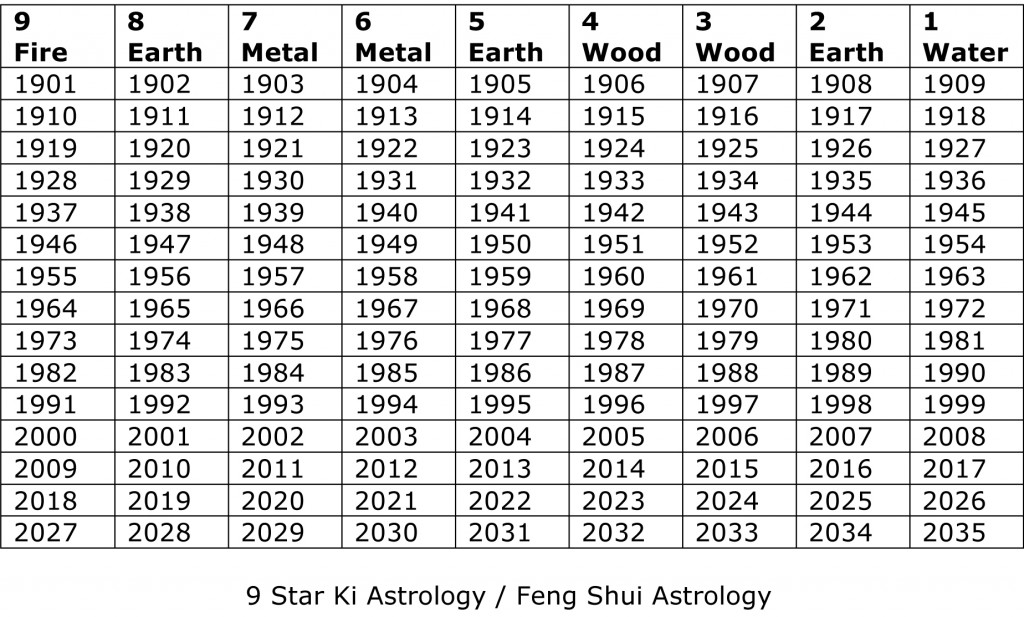
How can I calculate my personal star number?
Add all the digits of your birth year together until you obtain a single digit, then subtract that number from 11. For example, if you were born in 1987: 1 + 9 + 8 + 7 = 25 and 2 + 5 = 7; subtracting from 11 yields 4. That number indicates where your personal star resides in the annual bagua. Because there are exceptions for certain birth years and genders, a professional consultant can provide precise guidance. Or check it on this chart below.
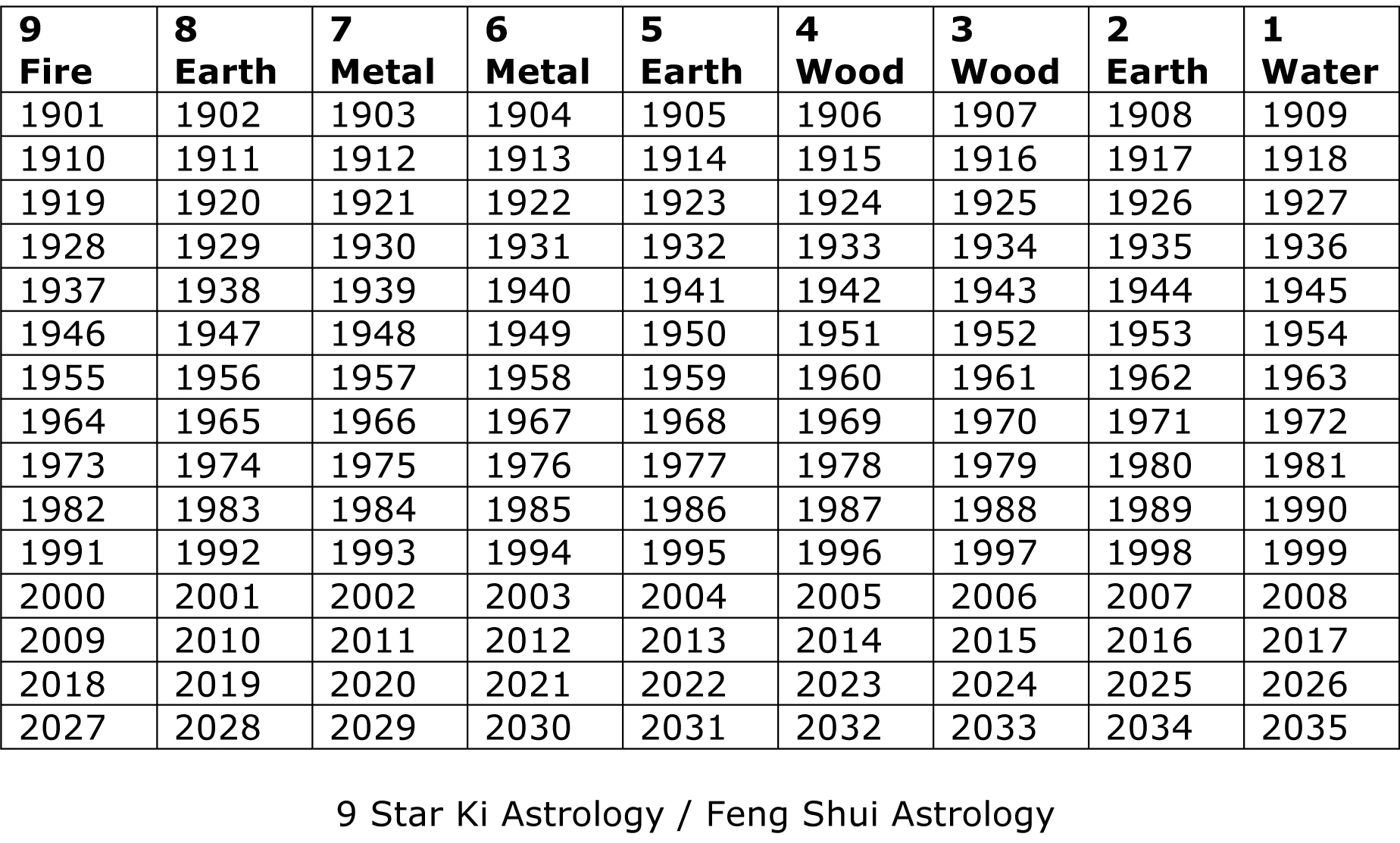
9 STAR KI Calendar
Is the fire horse year considered unlucky?
Cultural beliefs vary. In Japan, historical superstition led to a temporary decline in births in 1966 due to fears that women born then would have difficult marriages. There is no evidence to support such claims, and contemporary feng shui discourages fear‑based thinking. Instead, the fire horse year can be seen as an invitation to embrace change with courage and wisdom.
What if I don’t like the red colour or the horse images?
Well, modern, evidence-based feng shui is not dogmatic and respects people’s preferences and tastes. For colour preference, you might like the Cloud Dancer: Pantone’s 2026 Colour of the Year. For other feng shui interventions, be creative and use what works for you. The feng shui ritual, whatever it might be, is the servant of intention. Feng shui = intention + ritual. As Virginia Satir (family therapist) observed, “There are more than 250 different ways to wash dishes, depending upon who is washing and the ingredients used.”
Do the flying stars apply to everyone?
The flying star system offers general influences based on the movement of qi. How strongly those influences are felt depends on the layout, orientation and use of your space. Personal astrology, such as your Chinese zodiac sign and star number, further refines these trends. Use the guidelines as flexible suggestions rather than rigid rules. Remember, astrology is a belief system, not an evidence-based practice. There are different types of astrology, eastern and western – choose one that resonates with you and has the least fear-based beliefs.
How do astrology and feng shui work together?
Astrology provides insight into temporal energies — your personal life cycles and the broader mood of a year — while feng shui shapes spatial energies. Aligning your actions with auspicious timings and arranging your surroundings to support your goals creates a synergistic effect. For example, beginning a new project when the Star 1 is in the centre encourages success, while choosing a calm space for contemplation supports mental clarity. Most astrological systems draw from natural seasonal cycles, i.e. spring, summer, late summer, autumn and winter, which is based on the five-element theory, and this in old days offered some predictability for survival. Some ideas in astrology still have value, and some are just metaphoric or story-like beliefs. Feng shui offers a warning: don’t put your life in feng shui; put feng shui in your life, which means feng shui is a tool that should be used with common sense and not relied on blindly.
I’m not into Eastern astrology. What does Western astrology have in store for 2026, including key planetary alignments and predictions with specific dates?
In Western astrology, 2026 features several significant planetary movements that astrologers see as shaping the year’s themes and collective trends. One of the most widely discussed events is the entry of Saturn into Aries on 13 February 2026, beginning a new cycle in the sign associated with initiative, leadership and personal assertion, and lasting until April 2028. This transit is often interpreted as requiring patience and disciplined effort to pursue long-term goals, even as Aries’ bold energy pushes for action and independence.
Another landmark shift is Neptune entering Aries around 26 January 2026, marking a long-term repositioning of the planet of imagination, dreams and collective vision into a sign of self-definition. This transit is seen as supporting a renewed focus on creativity and self-reinvention, while also challenging individuals to distinguish between aspiration and illusion.
Uranus moves into Gemini on 25 April 2026, beginning a transit likely to last into 2032. Uranus in Gemini is associated with rapid changes in communication, technology and information exchange, emphasising innovation, unexpected developments and a shift toward new ways of thinking and connecting.
Jupiter also plays an important role in 2026, travelling through Cancer until 30 June, before entering Leo for the second half of the year. Jupiter’s presence in Cancer is interpreted as amplifying themes of emotional security and community, while Jupiter in Leo is associated with creativity, confidence, self-expression and broader horizons.
In addition to these transits, astrology sources note Mercury retrogrades occurring in water signs such as Pisces, Cancer and Scorpio at different points in the year (for example, 26 February to 20 March), which are traditionally seen as times for reflection, review and recalibration in communication and planning.
Predictions drawn from these alignments tend to emphasise a year of bold beginnings and structural realignment, with practical discipline intertwined with creative reinvention. Positively, 2026 may encourage greater confidence, emotional insight and innovation, especially in areas of communication and collective endeavour. Cautionary themes include the need to balance impulsive action with thoughtful restraint, and to distinguish authentic long-term goals from fleeting desires, particularly under the influence of Neptune’s visionary but sometimes diffuse energy.
In short, Western astrology points to 2026 as a year shaped by initiation, acceleration, and redefinition: initiation through Saturn and Neptune entering Aries, pushing new beginnings that require maturity and responsibility; acceleration through Uranus moving into Gemini, rapidly transforming communication, technology and how ideas spread; and redefinition through Jupiter’s shift from Cancer to Leo, moving collective focus from emotional security to confident self-expression and visible leadership. These Western astrological themes offer a complementary lens to the Chinese Year of the Fire Horse, with both traditions highlighting 2026 as a period of dynamic energy, transformation and new cycles of growth.
What guidance does astrology offer for navigating personal and professional life in 2026, and how do Western and Chinese astrology perspectives compare?
From a Western astrology perspective, 2026 encourages self-leadership, adaptability, and visible confidence, with an emphasis on taking initiative while remaining mentally flexible and ethically grounded. Professionally, innovation and communication are key, while personally, the focus is on authenticity, emotional clarity and mature independence.
From a Chinese astrology perspective, the Year of the Fire Horse reinforces similar themes but expresses them through action and momentum. The Fire Horse favours decisiveness, courage, and forward movement, encouraging people to act on opportunities rather than overthink them. In personal life, this means cultivating inner alignment and passion without burnout. In professional life, it supports entrepreneurial thinking, bold leadership, and the willingness to take calculated risks, while also reminding us to balance speed with awareness so that enthusiasm does not turn into impulsiveness.
Together, both systems point to 2026 as a year for confident action, driven by clarity, intention, and focus, rather than hesitation or passive waiting.
What should I do if I feel overwhelmed by conflicting advice?
Trust your intuition, common sense and prioritise what resonates. The purpose of feng shui and astrology is to offer a metaphoric, story-like framework and to enhance well‑being, not to create anxiety. A consultation with an experienced feng shui practitioner can clarify confusion and tailor recommendations to your circumstances.
Conclusion and invitation
The Year of the Fire Horse 2026 promises to be an invigorating period of innovation, passion and transformation. By understanding the qualities of the fire horse, balancing the fiery energy with the calming presence of water, and aligning your living and working spaces with the annual flying stars, you can ride the wave of change with confidence. Whether you choose to display a vibrant horse sculpture, light extra lights to welcome new opportunities, or take a few moments each day to breathe and centre yourself, the key is to act with intention and then find a feng shui ritual to anchor and prime yourself.
If you are uncertain about how to implement these suggestions or would like tailored advice for your home or workplace, I am available for consultation. With over forty‑five years of experience in feng shui, environmental psychology and academic research, I can help you translate these principles into practical actions. Together we can create spaces that support health, harmony and prosperity throughout the fire horse year and beyond. Call / WhatsApp me on +44 7956 288574 or email me.

Horseshoes for prosperity in 2026
The map is not the territory. But a map drawn with understanding may guide you better than one drawn with rules. And that’s my concluding feng shui tip. How do you work with feng shui without letting it work you? From that stance, you stop asking the map to be kind, or define you, and start using the map to deepen your capacity to remain clear, kind, free and sovereign in whichever terrain you find yourself.