Feng Shui Patterns: Recognition, Utilisation, Creation and Freedom Beyond Feng Shui – a lecture with Jan Cisek

I’m giving a lecture called Feng Shui Patterns: Recognition, Utilisation, Creation and Freedom Beyond Feng Shui on Saturday, 16 May 2026, 5pm UK time, at IFSG Feng Shui Summit.

You can register for this Feng Shui Summit here. The live sessions are FREE.

Fengshui is the study of environmental patterns shaping your life through space and time. Advance beyond traditional feng shui models into advanced fengshui pattern recognition, utilisation and creation – learn to read the hidden patterns of your home and workplace, understand energetic flows, feedback loops and leverage points, work intelligently with complexity, and design environments that resolve challenges at their roots and genuinely support long-term freedom, stability, growth and success.

Fengshui (wind-water) is, at its core, the study of environmental patterns. It explores how qi, or life energy, moves through space and time, shaping landscapes, buildings, organisations and human experience. Fengshui therefore works with two inseparable dimensions: spatial patterns, how energy arranges itself in environments, and temporal patterns, how energy changes, cycles and evolves.

At the foundation of fengshui lie several key pattern languages. Yin and yang describe divergence and convergence. The five elements express cyclical transformation through seasonal processes. The bagua maps energetic relationships within space. Fengshui astrology extends this into time, exploring how energetic patterns unfold across life phases. Together, these models provide a vocabulary for observing how environments function, where harmony emerges, and where imbalance develops.

This talk goes beyond using these models descriptively and focuses on advanced pattern work. You will be introduced to three interrelated capacities: pattern recognition, pattern utilisation and pattern creation.

Continue reading

Auspicious Living: Transforming Your Environment and Yourself to Enhance Positive Outcomes and More…

What is auspiciousness?

In general terms, “auspicious” refers to something that is favourable, promising, or conducive to success. In cultural and spiritual contexts, it often relates to events, dates, or symbols that are believed to bring good fortune, positive outcomes, and blessings. In short, auspiciousness is good fortune or fortunate blessings.

In feng shui, an auspicious arrangement might involve positioning furniture, decorations, or buildings in ways that attract positive energy (qi) and create harmonious environments. Auspicious dates and times are also selected for important events such as weddings, business openings, and other significant undertakings to ensure success and good luck.

For example, in feng shui, placing a water feature in an auspicious location in your home or office can be considered auspicious as it is believed to attract wealth and prosperity. Similarly, in many cultures, certain numbers, colours, charms or symbols are seen as auspicious and are used to promote well-being and success.

Continue reading

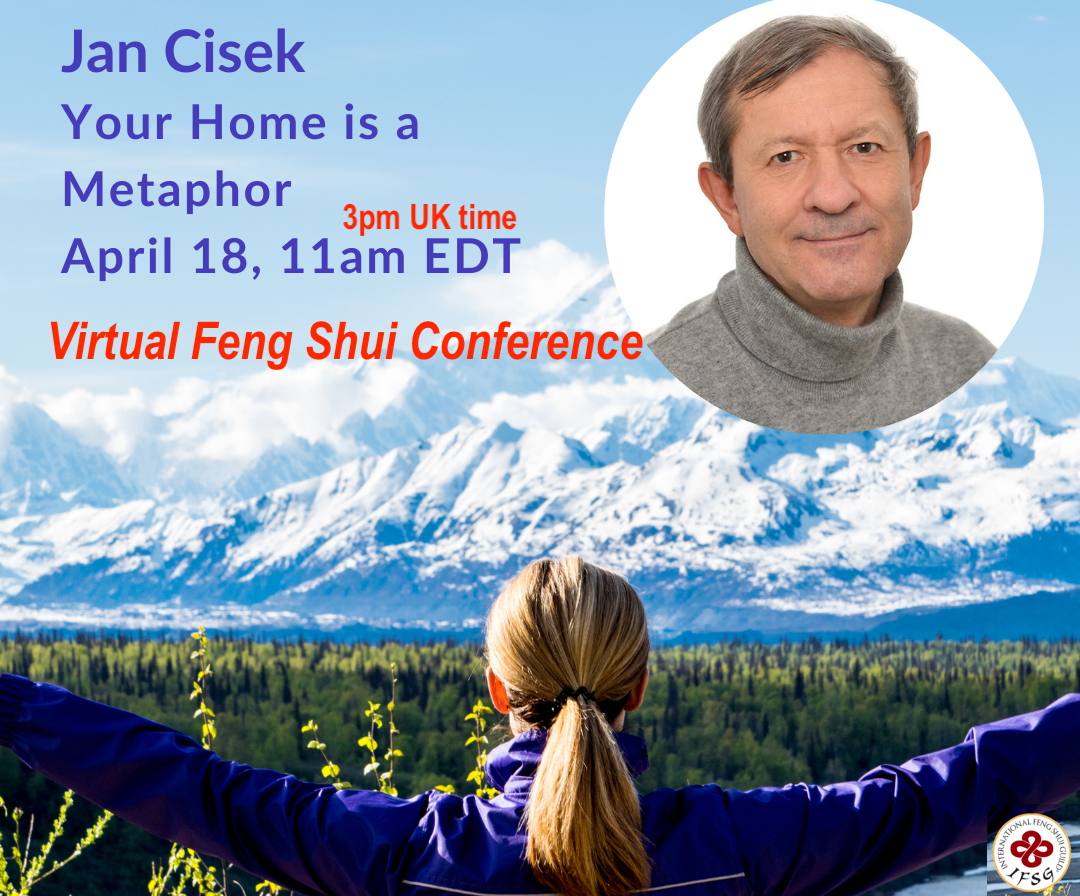
Your Home is a Metaphor Thursday April 18, 3pm UK time, ZOOM, Free live event

Your Home is a Metaphor
Thursday April 18, 3pm UK time, ZOOM PROGRAM ONE

Jan Cisek, Feng Shui Conference

Free live event – book here: https://www.ifsguild.org/feng-shui-conference/

This session will take you on a journey of interpreting your home through the lens of metaphor and symbolism in feng shui. This exploration will not only enhance your understanding of feng shui but also deepen your insight into how your living environment can be adjusted to foster desired outcomes.

Robert Stetson Shaw once remarked, “You don’t perceive something until the right metaphor allows you to see it.” This observation is profoundly relevant to the practice of feng shui, where the arrangement and symbolism within our living spaces play a crucial role.

Continue reading

Based Feng Shui – a Type of Feng Shui

My holistic and integral feng shui style: modern, integral, person-centred and evidence-based approach – in short, based feng shui

Quite often my potential clients ask me what kind of feng shui I do. Obviously, I’ve studied all kinds of feng shui schools, starting from classical feng shui which includes form and compass as well as other forms of feng shui including modern, intuitive, holistic and so on. I’m also a scientist, an environmental psychologist. My approach to feng shui style is very eclectic and contemporary as well as person-centred. When I work, I incorporate three feng shui schools of thought – classical feng shui, modern feng shui and virtual feng shui – plus environmental psychology. As well as drawing on his extensive experience working with top brands and corporations he also introduces elements from other fields in which he has extensive expertise: geopathic stress, electromagnetic radiation (EMR) /EMF pollution, space clearing, vastu shastra, dowsing, fractality/coherence and earth acupuncture. I have produced many innovative solutions and integral improvements in feng shui (and even in branding and logo design).  I also work virtually, providing feng shui consultancy online.

Grounding or earthing has many health benefits

Based feng shui – down to earth, practical feng shui

Feng shui is the psychology of place

Continue reading

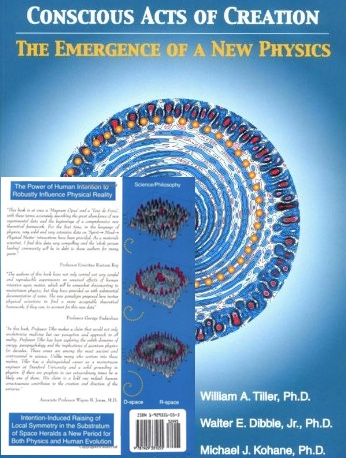
Space Conditioning based on “Conscious Acts of Creation: The Emergence of a New Physics” by William A. Tiller, Walter E. Dibble, Jr., and Michael J. Kohane


Conscious Acts of Creation The Emergence of a New Physics by William A. Tiller

“Conscious Acts of Creation: The Emergence of a New Physics” by William A. Tiller, Walter E. Dibble, Jr., and Michael J. Kohane merges theoretical physics with experiments on the influence of intention on physical reality. It presents a new model incorporating an 8-dimensional base space to explain quantum mechanics and introduces concepts like “sacred space”, “space conditioning” and the impact of intention on physical reality at a distance. The book explores practical applications and redefines the understanding of reality, challenging conventional physics with a blend of science and spirituality.

Reference
Tiller, W.A., Dibble, W.E., Jr., & Kohane, M.J. (n.d.). Conscious Acts of Creation: The Emergence of a New Physics. Pavior Publishing.


Continue reading