
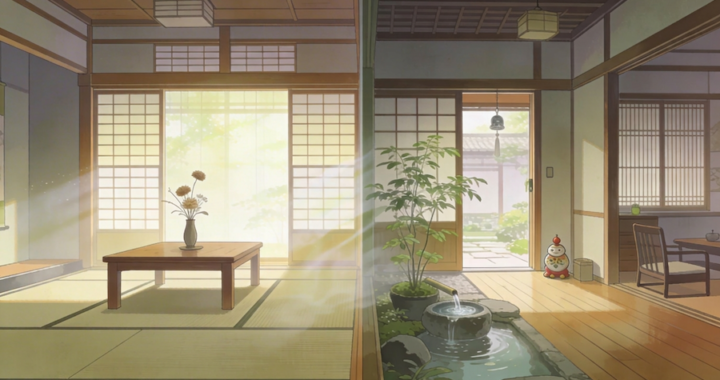
Kansō. What Kansō Actually Is. Kansō vs Fusui. Japanese Feng Shui.
Kansō is not literally “a Japanese version of feng shui”, but a Zen aesthetic principle of simplicity that overlaps strongly with fusui in how it shapes space, energy flow, and psychological feel. Fusui (Japanese feng shui) comes from Chinese geomancy, whereas kansō is native to Japanese aesthetics, yet architects and writers increasingly present them together as complementary ways of creating calm, uncluttered environments. Read more about Kansō Read more about Fusui
What Kansō Actually Is
Kansō (簡素) means simplicity, plainness, or the elimination of clutter, and is one of the core Zen- or wabi-sabi-related aesthetic principles in Japanese art and design. It encourages removing non-essential objects so that only what is functional or meaningful remains, with empty space (ma) treated as a positive, powerful element rather than something to be filled. In interiors, kansō translates into minimal furniture, restrained decoration, and natural materials, aiming to calm the mind and reduce anxiety by creating visual and cognitive clarity.
So if fusui talks about qi flow, kansō talks about simplicity and clarity, but both end up re-shaping the room in surprisingly similar ways. Read more about Kansō
Fusui in Contrast
Fusui (風水) in Japan is explicitly framed as feng shui, an imported system concerned with directions, elements, and the flow of qi (or ki) in the environment. It focuses on how building orientation, door and window placement, and room layout govern auspicious or inauspicious energy, drawing on yin-yang and five-phase theory. Contemporary Japanese practice often softens the technical side and links fusui to broader Japanese aesthetics such as kansō and wabi-sabi, rather than treating it as a rigid, formulaic system.
In short: fusui is explicitly cosmological, kansō is explicitly aesthetic, but in a real living room they push in similar directions.
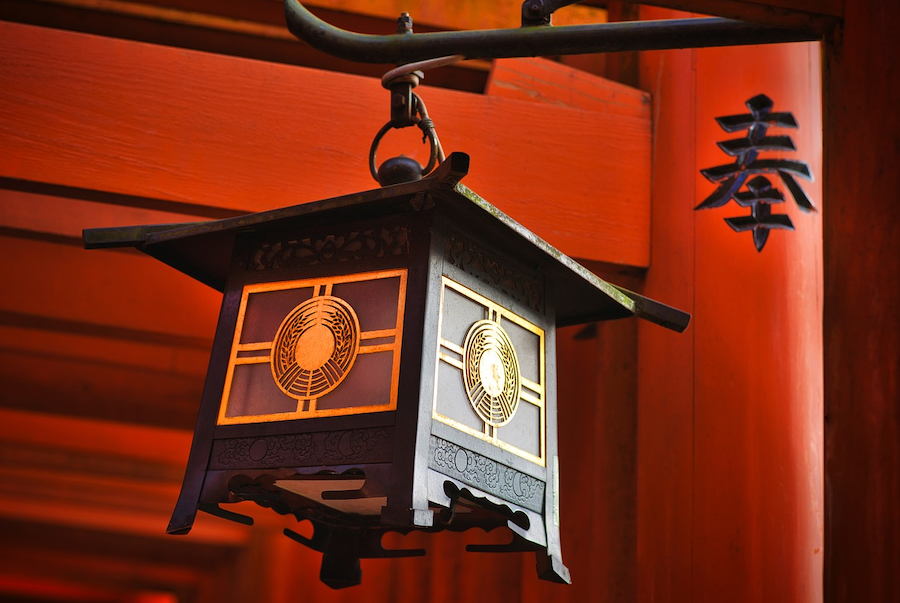
Key Similarities
Sources that introduce kansō to Western readers repeatedly say it is “similar to feng shui” because it, too, is concerned with unobstructed energy flow in a space. You can see the parallels:
-
Energy and flow: Both kansō and fusui care about the movement of energy (chi or ki) through a room, favouring clear pathways and avoiding blocked circulation.
-
Clutter reduction: Kansō explicitly demands elimination of clutter; fusui often treats clutter as stagnating energy and a source of bad luck or low vitality.
-
Psychological calm: Both aim to create spaces that feel calm, balanced, and supportive of well-being, even if one frames that as “good qi” and the other as simplicity and seijaku, or stillness.
-
Practical overlap: Japanese architects and writers explicitly mention using kansō and fusui together to design homes that feel open, peaceful, and well-balanced in terms of light, air, and layout.
So if your assumption is “kansō is just minimalism, fusui is just superstition”, that is too crude. Both operate as environmental scripts that regulate perception, behaviour, and affect through spatial cues.
Crucial Differences
Where they diverge is in origin, ontology, and toolset.
-
Origin and framework
-
Kansō: Zen or wabi-sabi aesthetic concept, part of a cluster including fukinsei (asymmetry), shizen (naturalness), and yūgen (subtle profundity).
-
Fusui: Offshoot of Chinese feng shui, integrated into Japanese onmyōdō, concerned with directions, elements, and cosmological alignment.
-
-
What they try to optimise
-
Kansō aims for visual, functional, and existential simplicity. It is more about perception and lifestyle than fate or luck.
-
Fusui aims to enhance fortune, protection, and energetic balance (health, relationships, prosperity) through spatial alignment.
-
-
Methods
-
Kansō uses minimisation, natural materials, neutral tones, and empty space. It rarely invokes compasses, cures, or talismans.
-
Fusui may use directionality, element balancing, and symbolic items such as mirrors, charms, plants, or water features placed intentionally.
-
Think of kansō as the “how it looks and feels” layer, and fusui as the “how it is cosmologically aligned” layer that sometimes piggybacks on similar visual strategies.
Kansō vs Fusui
| Aspect | Kansō (簡素) | Fusui (風水) |
|---|---|---|
| Core idea | Simplicity, elimination of clutter | Directional energy and element balance |
| Origin | Zen or wabi-sabi aesthetics | Chinese feng shui via onmyōdō |
| Main concern | Calm, clarity, functional minimalism | Auspicious qi, luck, protection |
| Methods | Decluttering, empty space, modest décor | Layout, orientation, symbolic cures |
| Relation to feng shui | Often described as “similar to feng shui” | A Japanese form of feng shui itself |
| Use together? | Combined in modern Japanese design | Often integrated with kansō in practice |
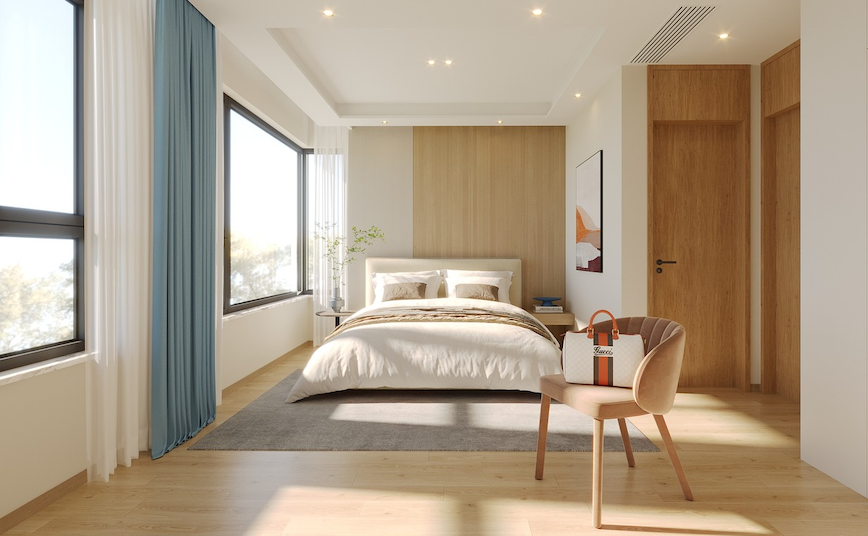
Practical Example: How They Interact in a Room
Imagine you are redesigning a bedroom or workspace.
From a kansō perspective, you strip the room to essentials, remove visual noise, keep surfaces almost bare, and highlight one or two meaningful objects, allowing ma, or empty space, to be the main “feature”.
From a fusui perspective, you then rotate the bed or desk to a supportive direction, avoid having your back directly to the door, keep pathways clear for qi to circulate, and perhaps add a plant or soft lighting in particular sectors to balance elements.
The result can look very similar to high-end Japanese minimalism, but under the hood, you have two quite different conceptual frameworks interacting, one aesthetic-philosophical, one geomantic-cosmological.
If you are integrating this into your own work, are you more interested in kansō as an aesthetic-psychological construct, or fusui as a cosmological-belief system shaping spatial behaviour?
Read more about Kansō
Read more about Fusui